If you ride bikes, you already know the name. The Passo dello Stelvio isn’t just Italy’s greatest climb — it’s one of the defining ascents in all of cycling, a fixture of the Giro d’Italia since 1953, and a rite of passage for anyone serious about riding mountains. I’ve climbed it more times than I can count, both racing and guiding, and it still gets my heart rate up before I even clip in.
This guide covers everything I’d want to know before attempting it for the first time: the numbers, the route options, the weather risks, and the small details that make the difference between a miserable slog and one of the best days you’ll ever have on a bike.
A Quick History
The Stelvio was built in the 1820s under Habsburg rule, originally as a military and trade road connecting Lombardy to the rest of the Austrian Empire — which is part of why the engineering is so remarkable for its age. It has featured in the Giro d’Italia more than a dozen times, and the “Cima Coppi” — the award given to the highest point reached in that year’s race — is awarded here more often than at any other climb. Fausto Coppi, Marco Pantani, and countless other legends of the sport have all suffered up these switchbacks, and riding it yourself puts you directly into that history.
Stelvio Pass: The Key Numbers
- Elevation at summit: 2,758m — the second-highest paved pass in the Alps, and the highest in Italy
- Classic ascent (from Prato allo Stelvio): 24.3km, average gradient 7.4%, 1,808m of climbing
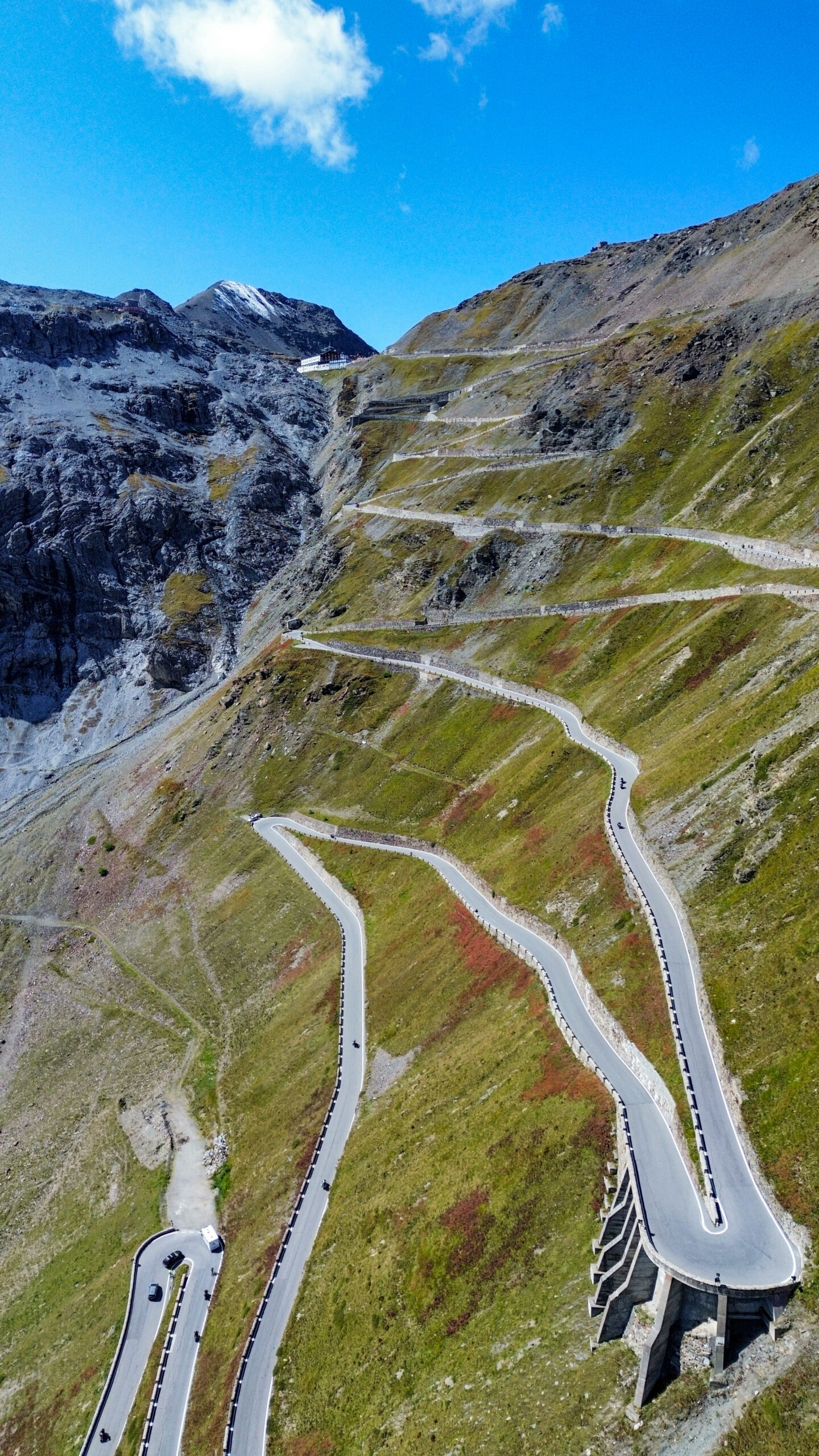
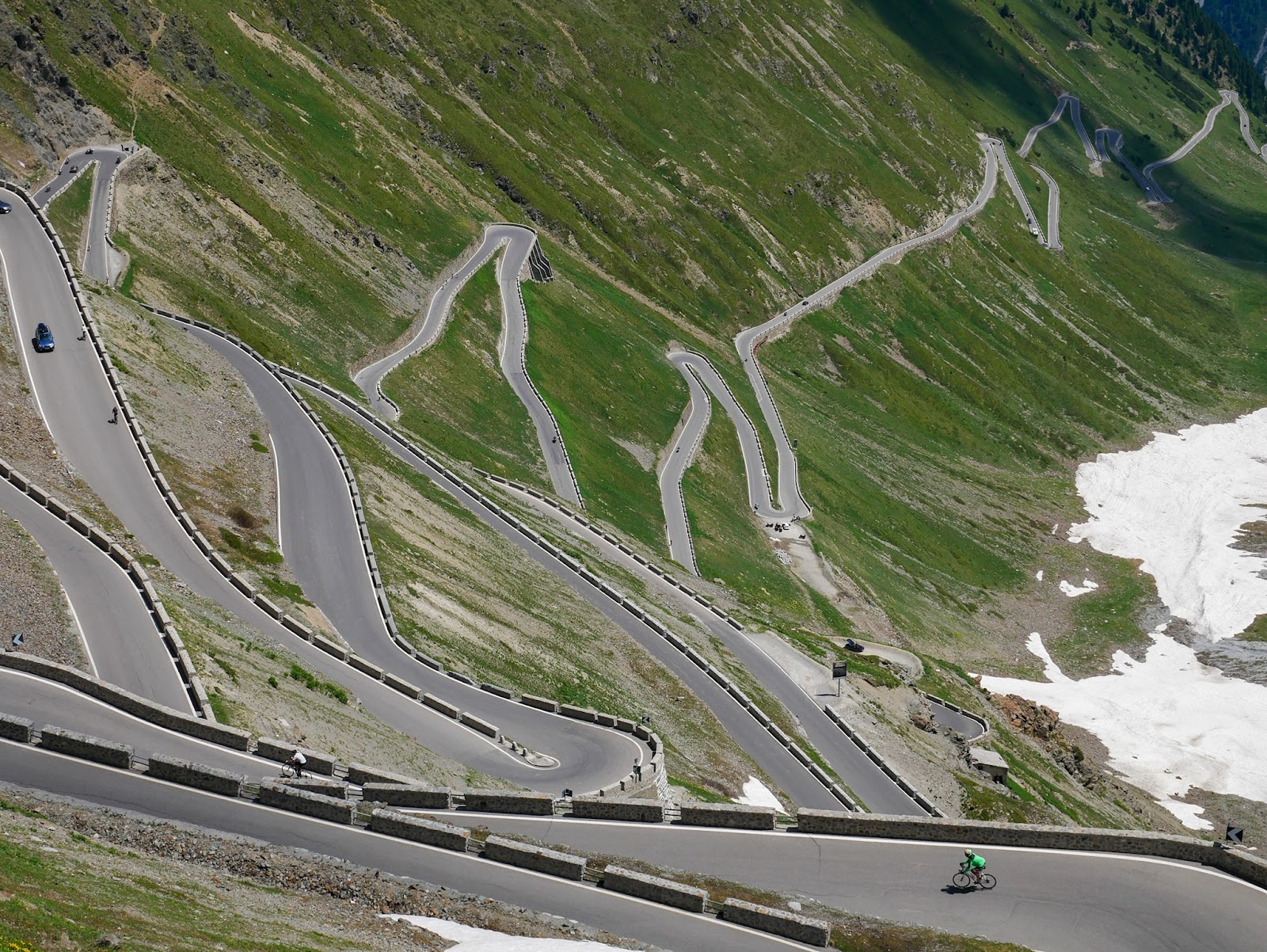
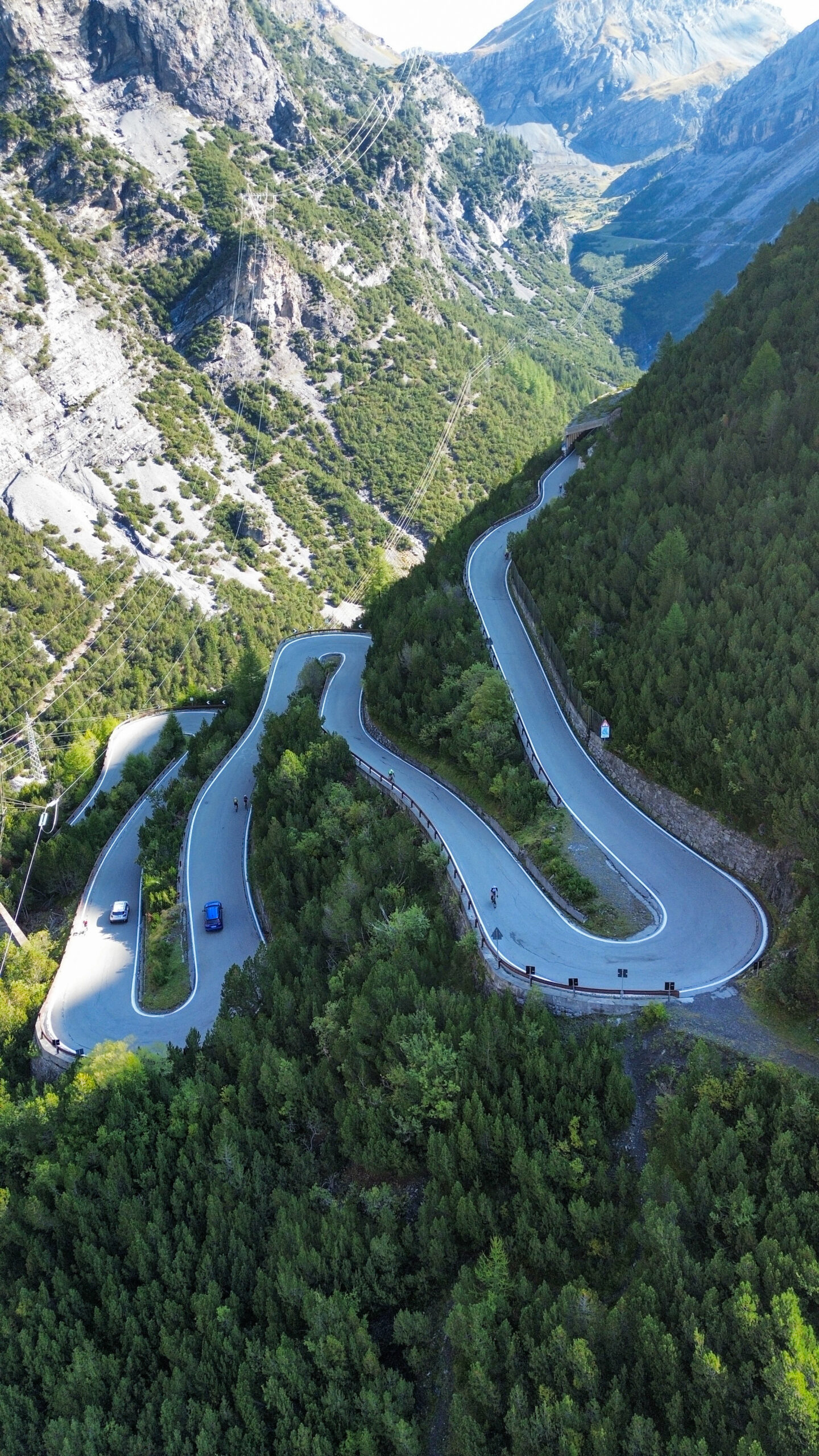
- Hairpin bends: 48 numbered switchbacks on the Prato side alone, each marked with a small stone signpost counting down to the summit
- Ride time: 1.5–3 hours depending on fitness, most riders average around 2 hours
- Steepest sections: ramps touching 12% in the upper third, though the climb rarely sustains anything that steep for long
Those numbers don’t really tell the story, though. The Stelvio is less about any single steep ramp and more about sustained rhythm — you settle into a gear, find a cadence, and just stay there for two hours while the valley drops away beneath you and the switchbacks stack up below like a drawn diagram.
Which Side Should You Climb?
There are three genuinely different approaches, and each has its own character.
From Prato allo Stelvio (the Bormio-side numbering, climbing north) — this is the classic, most photographed route, with the tightly stacked hairpins visible from below that appear in every cycling documentary and calendar. The gradient here is remarkably consistent, which actually makes pacing easier than you’d expect from the visuals.
From Bormio — slightly longer at around 21km, with a similar average gradient but a different rhythm — more exposed in sections, and in my experience the quieter option if you want fewer cars and tour buses sharing the road with you.
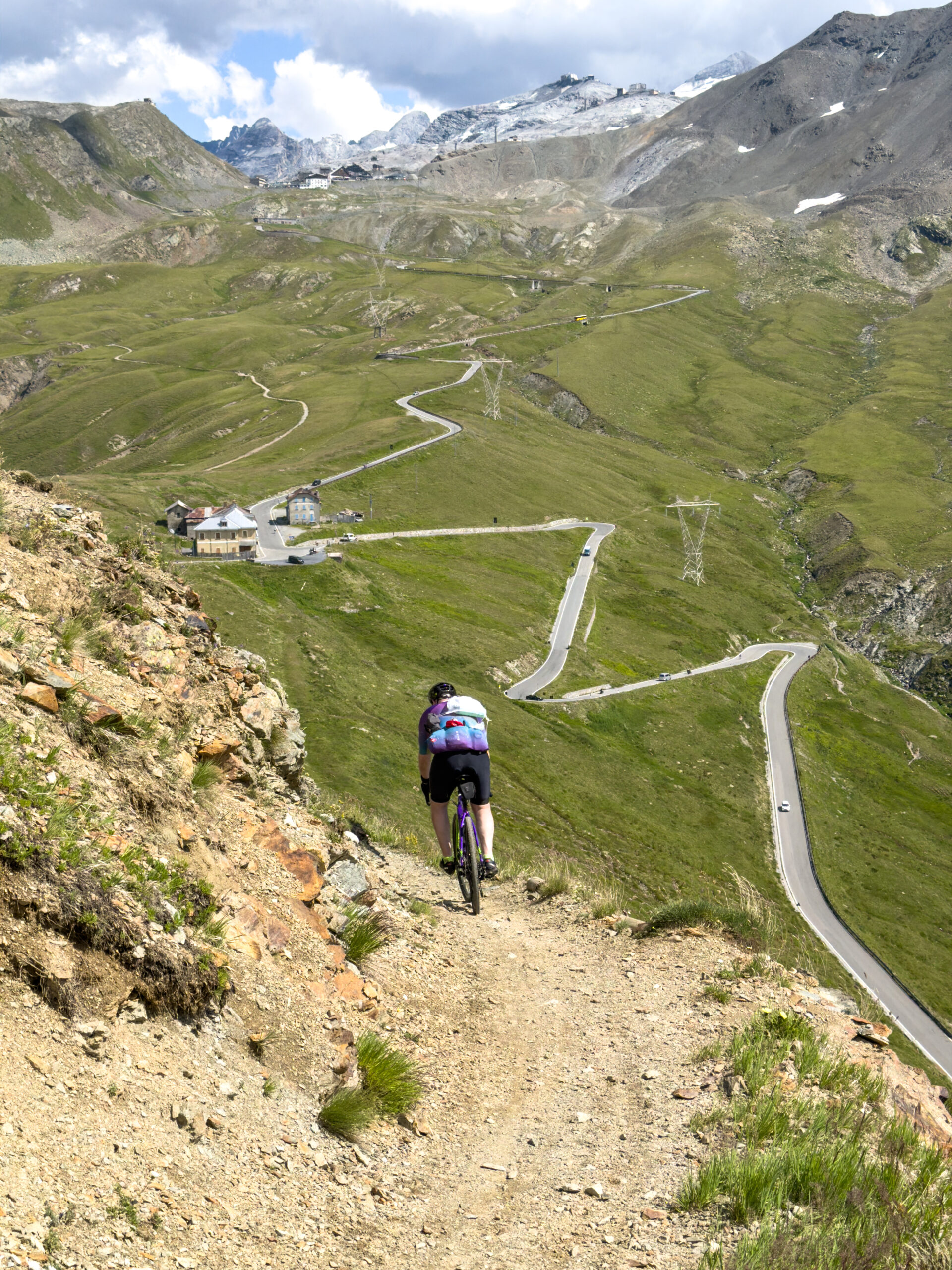
From Switzerland via the Umbrail Pass — a partially unpaved option for the more adventurous rider, joining the main Stelvio road near the summit. This is a good option if you’re already riding a gravel bike or want to avoid the busiest tourist stretch entirely.
If it’s your first time, ride the Prato side. It’s the one worth doing once purely for the scenery and the sense of occasion, and the gradient is honest and consistent rather than punishing in sudden surges — which makes it more approachable for a strong recreational rider than the raw numbers might suggest.
Best Time to Ride
The pass is only open roughly late May or early June through October — it’s closed under snow the rest of the year, and even once open, you’ll often find snow banks taller than a person stacked at the roadside near the summit in early June. This is actually part of the spectacle; riding through a narrow corridor of snow at 2,700m in shorts and a jersey is one of those strange, memorable cycling experiences.
July and August give you the most reliable, settled weather, but also the most traffic and tour groups — motorbikes in particular tend to treat the hairpins as a playground, so stay alert on the outside of blind corners. If you can manage it, aim for mid-June or September instead: cooler mornings, noticeably thinner crowds, and long stretches of road entirely to yourself.
Start early, ideally before 9am. Not just for the sunrise light on the switchbacks, which is genuinely spectacular and worth planning a photo stop for, but because afternoon thunderstorms build quickly in this part of the Alps in summer, and you do not want to be exposed above the treeline when one arrives. Lightning at 2,700m is not a risk worth taking for a better lunch view.
What to Bring
Sunscreen reapplied before the descent — UV at altitude is stronger than it feels, especially with the wind cooling your skin
A packable jacket, not just a gilet — it can be 15-20°C colder at the summit than in the valley, and you’ll be descending at 50km/h+ afterward, which turns any temperature gap into a genuinely cold experience
Full-finger gloves for the descent, even in summer
Enough water for 2+ hours of steady effort — there are a couple of refreshment stops near the top in season, but don’t rely on them being open
A compact or triple chainset if you’re not used to sustained climbing — there’s no shame in an easier gear here; the goal is rhythm, not heroics, and grinding a harder gear for two hours will wreck your legs for the rest of your trip
Common Mistakes First-Timers Make
The single biggest mistake is going out too hard on the lower slopes. The gradient near the bottom feels almost gentle compared to what’s coming, and it’s tempting to ride at a pace that feels sustainable for the first 20 minutes — but the effort compounds, and riders who hammer the early kilometres are often the ones walking sections near the top. Treat the whole climb as a two-hour time trial against yourself, not a series of short efforts.
The second mistake is underestimating the descent. After two hours of climbing, it’s tempting to let gravity do the work and bomb down the other side — but the road surface, blind hairpins, and shared traffic with cars, motorbikes, and other cyclists mean a controlled, confident descent beats a fast, reckless one every time.
The Stelvio Gravel Route
Most cyclists know the Stelvio for its legendary 48 hairpins, but there’s another way to experience this iconic mountain—one that is quieter, wilder, and arguably even more memorable.
The Stelvio Gravel route leaves the main road before the summit and follows a military gravel road high above the valley. The climb becomes less about counting hairpins and more about riding through a spectacular alpine landscape, with panoramic views over the Ortler massif and the famous switchbacks far below.
The gravel itself is not highly technical, making it accessible to anyone with a gravel bike or a mountain bike and a reasonable level of fitness. The challenge comes from the altitude and the sustained climbing rather than difficult terrain. As with the road ascent, you’ll be riding above 2,500 metres, so pacing yourself is essential.
One of the biggest advantages of the gravel route is the solitude. While the main Stelvio road can be busy during the summer months, the gravel alternative feels remote and peaceful. It’s common to ride for long stretches without seeing another cyclist, making it a completely different experience from the classic ascent.
On our tours, we often offer the Stelvio Gravel as an optional route for riders looking for something different. Those who prefer the traditional road climb can tackle the famous hairpins, while more adventurous riders can head onto the gravel before both groups meet again later in the day.
If you’ve already ridden the classic Stelvio, the gravel route offers a fresh perspective on one of cycling’s most iconic mountains—and for many riders, it becomes the highlight of the entire trip.
How This Fits Into a Cigala Cycling Tour
There are two ways to ride the Stelvio with us. Our Italian Alps trip includes the Stelvio as part of the core itinerary — it’s one of the signature climbs of that week. Alternatively, if you’re joining our Lake Garda cycling tour in September, the Stelvio is also offered as an optional day trip from our Garda base, with a full support vehicle following the group so you’re never riding it unsupported, and a van waiting at the top for anyone who wants a lift back down rather than descending.
I lead this climb personally a lot of weeks in season, and it never gets old watching someone reach the top for the first time — the summit sign at 2,758m gets more photos taken next to it than almost anywhere else we visit.
If you’re building toward this one, don’t underestimate it — it rewards preparation more than raw power. Get consistent time in the saddle and some sustained climbing practice a few weeks out, and the Stelvio will be one of the best days you’ve ever had on a bike.
If you’d like a different combination of climbs or timing than either standard itinerary offers, we’re also happy to design a fully custom tour around the Stelvio for your group.
Frequently Asked Questions
How fit do I need to be to ride the Stelvio?
A rider comfortable sustaining a moderate effort for 1.5–3 hours can complete it. You don’t need racing fitness, but consistent time in the saddle in the weeks before your trip makes a significant difference to how much you enjoy it.
Is the Stelvio suitable for e-bikes?
Yes, and it’s an increasingly popular way to tackle it. The consistent gradient works well with e-bike assistance, and several of our guests have ridden it this way with excellent results.
How busy is the road in summer?
Reasonably busy in July and August, with cars, motorbikes, and tour buses sharing the road, especially near the top where there’s a small hub of cafés and souvenir stands. June and September are noticeably quieter.
Can I ride the Stelvio without a guided tour?
Absolutely — it’s a public road open to all cyclists in season. A guided day gives you support vehicle backup, local knowledge of the quieter timing windows, and someone who knows exactly where to stop for the best views and photos.
Should I follow a training plan to get ready for the Stelvio?
Yes! While you don’t need a training plan to complete the Stelvio, being well-prepared will make the climbs much more enjoyable and help you get the most from the tour.
If you’d like personalised coaching before your trip, check out my coaching plans here: coaching.cigalacycling.com.
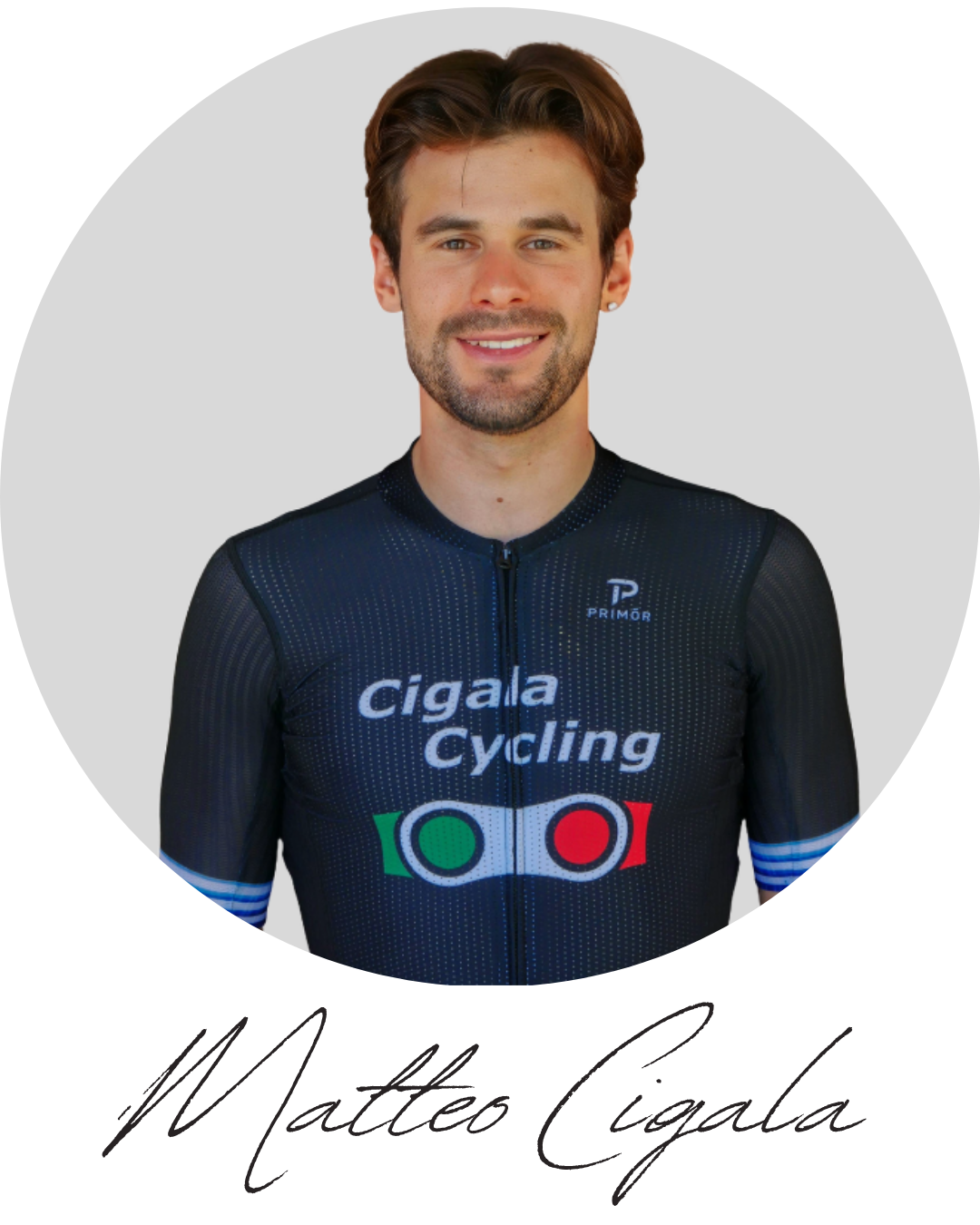
— Matteo Cigala
Former European Gran Fondo Champion, Vice World Gran Fondo & Gravel Champion, Italian Gravel Champion, Coach & Tours Director of Cigala Cycling Tours