I get asked this more than almost any other question: “When should I book my Dolomites trip?” The honest answer is there’s a real trade-off between weather, crowds, and road conditions, and the right answer depends on what you’re optimizing for. Here’s exactly how I’d think it through if it were my own holiday.
The Short Answer
Mid-June to mid-September is your riding window for the high passes. Outside of that, the highest roads are often still closed or only recently reopened with debris and gravel washed onto the tarmac from winter runoff. Within that window, early-to-mid June and September are the sweet spot for most riders — you get stable weather without peak-summer crowds or heat.
Why the Dolomites Have Such a Short Season
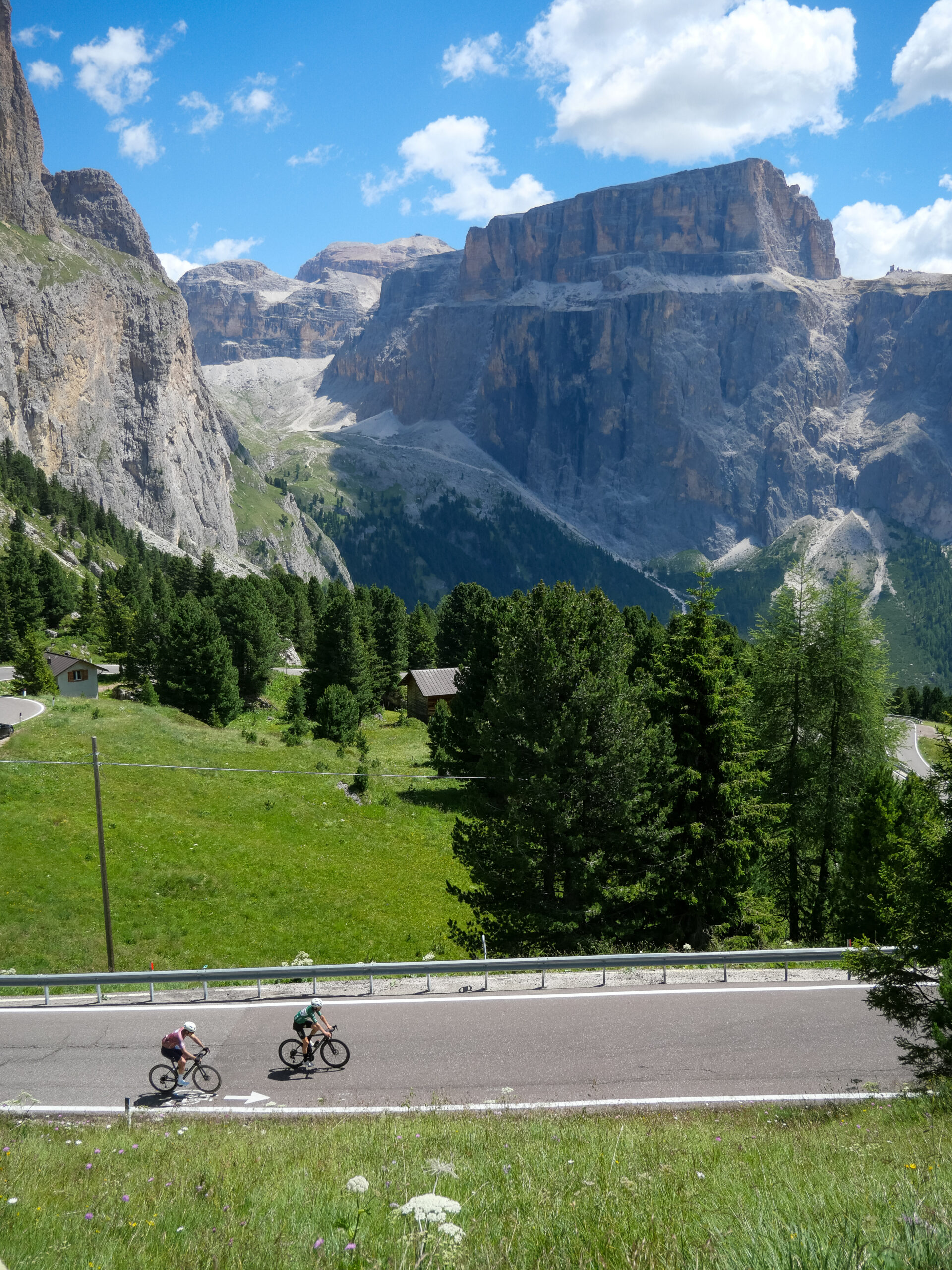
Unlike lower-altitude destinations, several of the region’s signature passes — Passo Giau, Passo Fedaia, Passo Pordoi — sit above 2,000m, and some stay snow-affected well into late May in a heavy winter. Local authorities generally clear and reopen roads in stages through May and early June, but exact dates shift year to year depending on snowfall, so it’s always worth checking current conditions if you’re booking right at the edges of the season.
Month by Month
Late May — Technically possible on lower routes, but risky for a Dolomites-specific trip since higher passes may still be closed or only partially cleared. Not recommended unless your itinerary has flexibility built in.
June — Passes reopen (some as late as the first week of June depending on snowfall), days are long, and temperatures are pleasant rather than punishing. Occasional afternoon storms build through the month, so plan to start rides early. This is my personal favorite month to guide in the Dolomites — the light is incredible, wildflowers are out on the high meadows, and the roads are noticeably quieter than July and August.
July — Warm, settled, and increasingly busy. Italian and German school holidays begin adding domestic tourist traffic to the passes, particularly around the Sella Ronda loop. Still very rideable, just book accommodation early.
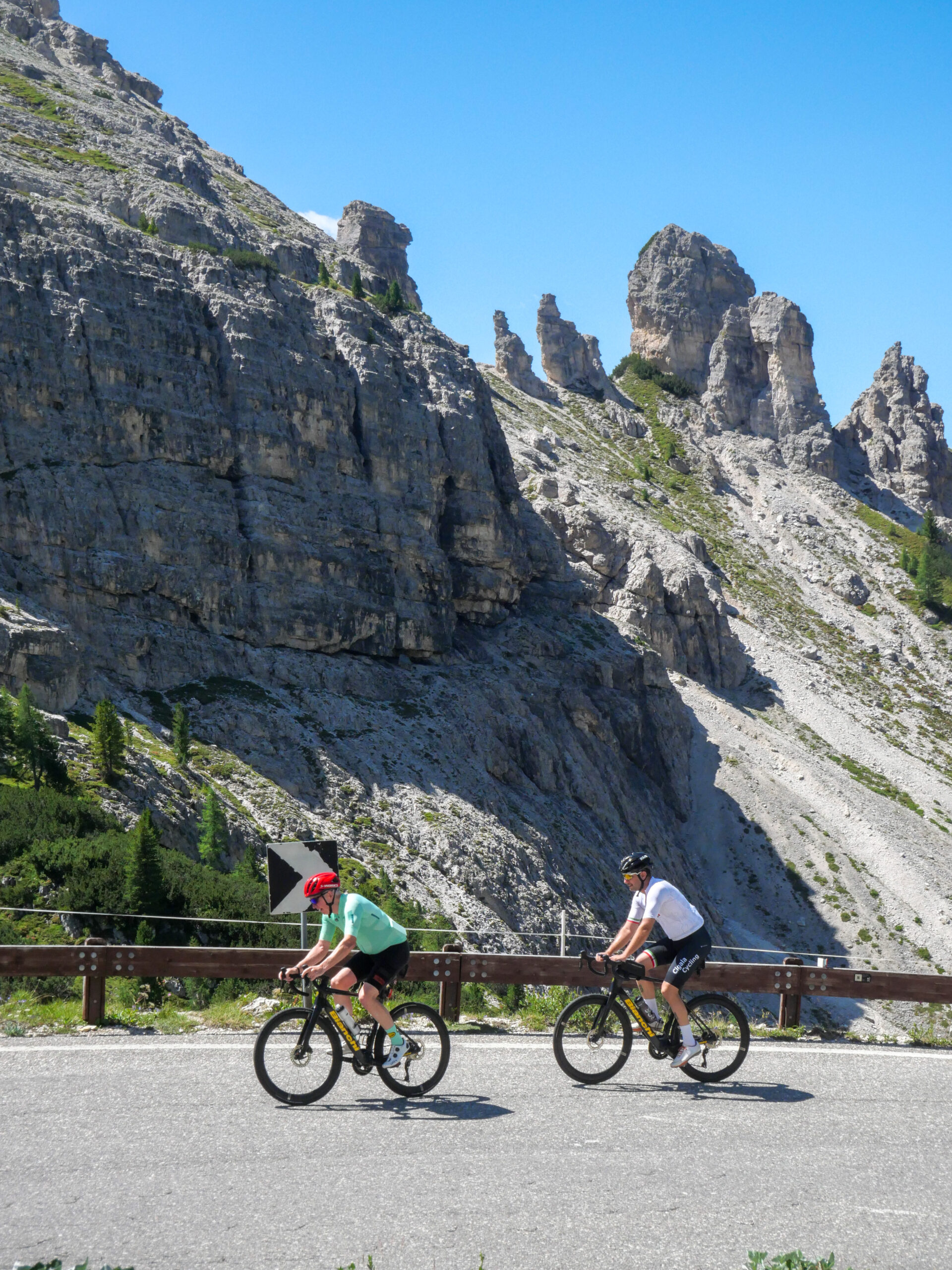
August — Peak season, in every sense. This is when Italy itself goes on holiday, and popular passes like Passo Pordoi and Passo Sella get heavy motorbike and car traffic, along with the busiest café stops. Weather is generally the most reliable of the year, but if you can only travel in August, ride the classic climbs early morning before 9am for a noticeably different experience.
September — My other favorite window, and the one I’d recommend to most first-time visitors. Traffic drops off noticeably after the last week of August as domestic tourists head home, temperatures are still very rideable, and the light turns a genuinely golden color on the pale limestone peaks in a way photos never quite capture. There’s a slightly higher chance of an early cold snap at altitude by late September, so pack accordingly.
October — Possible on lower valley routes, but higher passes may close without warning if snow arrives early in the month. I wouldn’t recommend booking a Dolomites-specific climbing trip this late unless your itinerary is flexible enough to shift to lower-altitude routes if needed.
What About Altitude and Temperature?
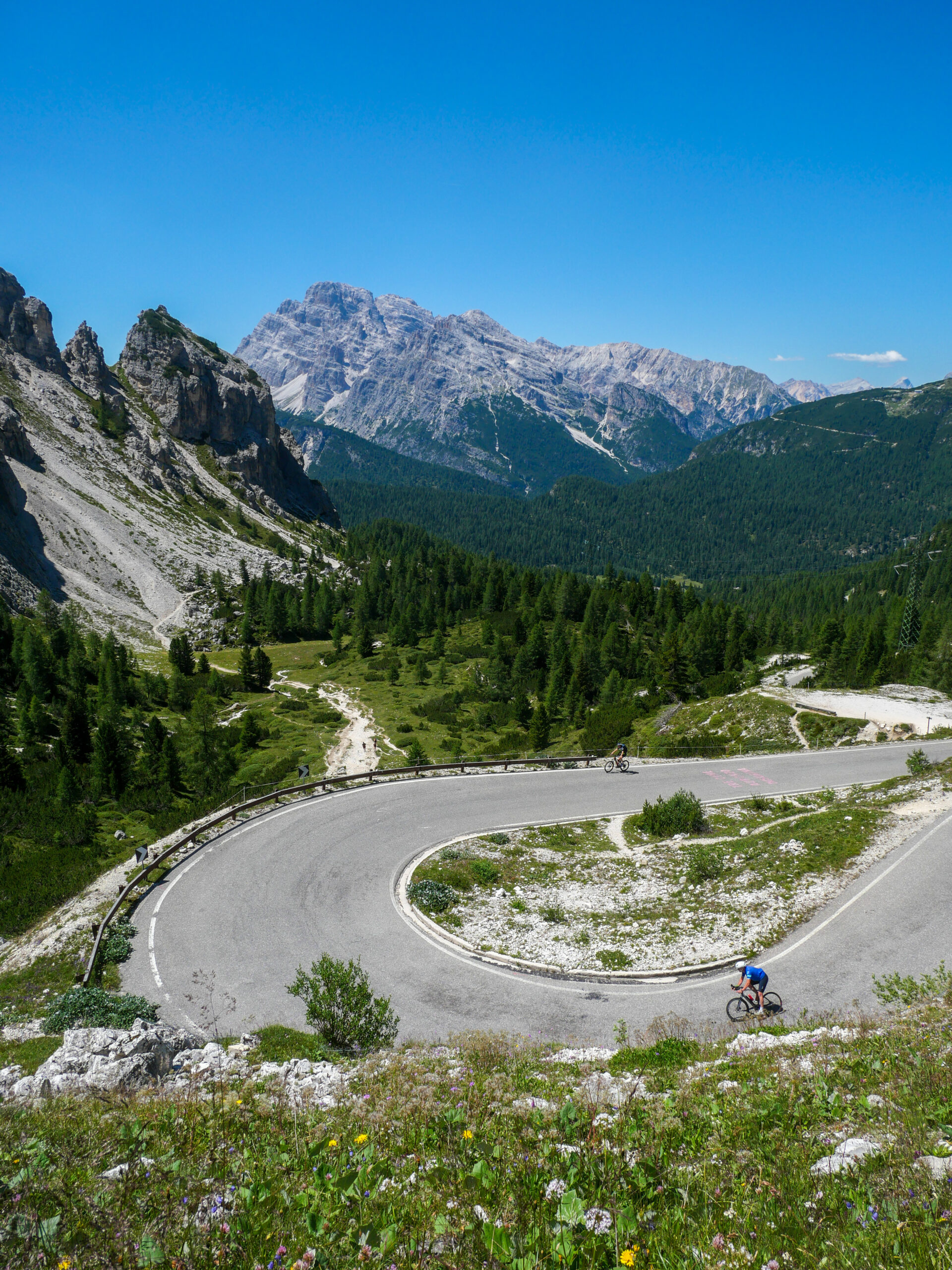
The Dolomites climbs regularly take you from valley floors around 1,000–1,400m up to passes at 2,000–2,240m — Passo Giau tops out at 2,236m, Passo Pordoi at 2,239m, Passo Fedaia at 2,057m. That means even in July, a valley morning starting at a comfortable 22°C can turn into a summit arrival at 10°C with wind chill making it feel colder still. Always carry a packable gilet or light jacket, even on a hot day — I’ve never once regretted bringing one, and I’ve regretted not having one more than once, usually somewhere windy near a summit café.
Booking Timing and Accommodation
If you want June or September dates, book well in advance — those are the two windows every experienced Dolomites cyclist is trying to get, and good accommodation in towns like Corvara, Cortina d’Ampezzo, Canazei and Arabba fills up fast for those shoulder-season weeks specifically because word has gotten around about how good the conditions are.
A Note on Rest Days and Weather Contingency
Even in the best months, mountain weather in this region can turn quickly. A good itinerary builds in either a flexible day or a lower-altitude backup route, so a single stormy morning doesn’t derail an entire trip. This is one of the quieter advantages of a guided tour — local knowledge of which valley roads make a good alternative when the high passes aren’t cooperating.
How This Fits Into a Cigala Cycling Tour
Our Dolomites cycling trip runs primarily in these June and September windows for exactly the reasons above — we want you riding the Giro d’Italia climbs in the best conditions, not fighting traffic or dodging afternoon storms. This trip is separate from our Italian Alps trip, which covers the Stelvio and surrounding climbs — worth checking both if you’re deciding which fits your priorities. Every route is one I’ve ridden and guided personally, season after season, so the timing advice here isn’t theoretical — it’s what I actually plan our own departure dates around.
If you have specific dates in mind outside our standard departures, or want a Dolomites itinerary built around your own timing and priorities, we’re also happy to design a fully custom tour for your group.
Frequently Asked Questions
Is it too cold to ride the Dolomites in June?
No — daytime temperatures in the valleys are typically comfortable, and while summit temperatures are cooler, a packable layer handles it easily. Early June can occasionally see a late-closing pass, which is why we build flexibility into itineraries at the very start of the season.
Are the Dolomites busy with tourists outside of cycling season?
Yes, this is a popular hiking and general tourism destination too, particularly in August. Traffic on the roads themselves is the main factor for cyclists rather than general tourist numbers.
What’s the coldest I should expect at a summit in shoulder season?
Single digits Celsius are possible at 2,200m+ in early June or late September, especially with wind. A proper packable jacket, not just arm warmers, is worth having for these months specifically.
Can beginners ride in the Dolomites, or is it only for strong climbers?
The passes themselves are genuinely demanding, but itineraries can be structured with lower-altitude valley routes on some days to balance the trip for a range of fitness levels — worth discussing when booking if you’re newer to sustained mountain climbing.
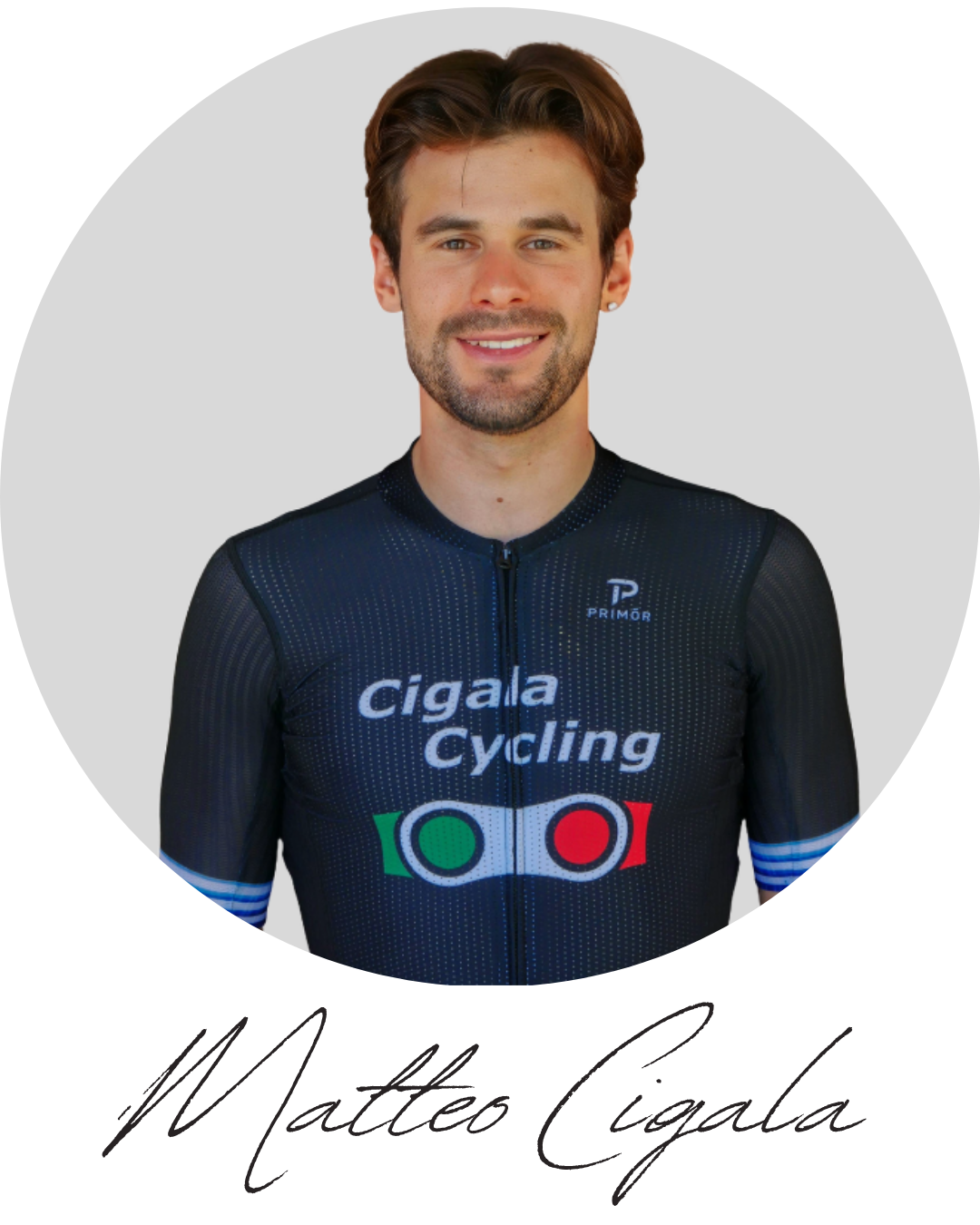
— Matteo Cigala
Former European Gran Fondo Champion, Vice World Gran Fondo & Gravel Champion, Italian Gravel Champion, Coach & Tours Director of Cigala Cycling Tours