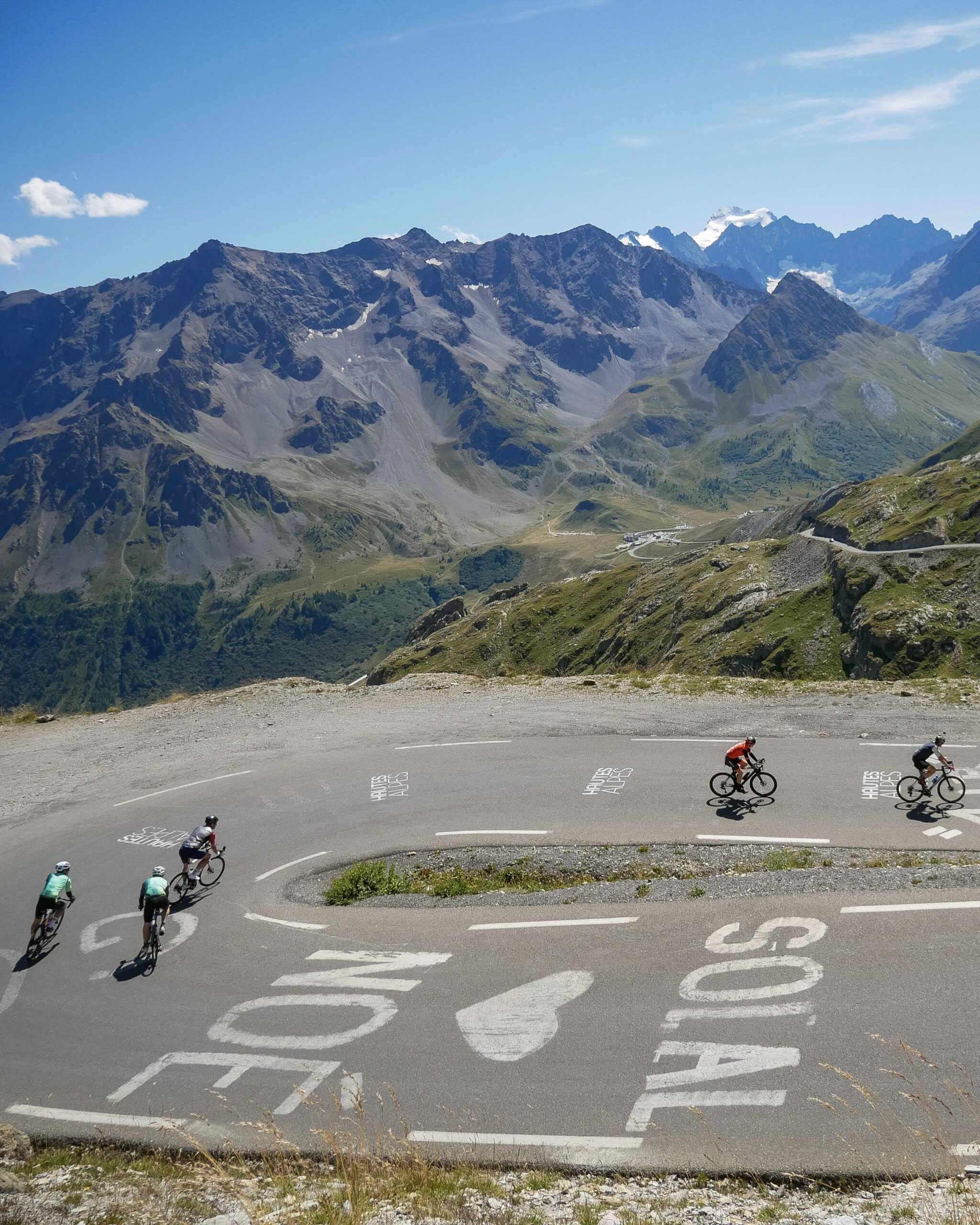
The Galibier is one of the great Tour de France mountains, and unlike some famous climbs that disappoint in person once you’re actually grinding up them, this one genuinely delivers — long, wild, and increasingly bare of trees the higher you go, until you’re riding through what feels like another planet near the summit, all exposed rock and thin alpine air.
A Brief History
The Galibier has featured in the Tour de France more than any other high mountain pass, first climbed by the race in 1911 and included dozens of times since. Henri Desgrange, the race’s founder, considered it one of the defining tests of the entire event, and a monument to him stands near the summit tunnel. Riding past it yourself, with the same views the earliest Tour riders would have seen (minus the modern road surface, thankfully), is a genuinely special moment for anyone who follows the sport’s history.
Key Numbers
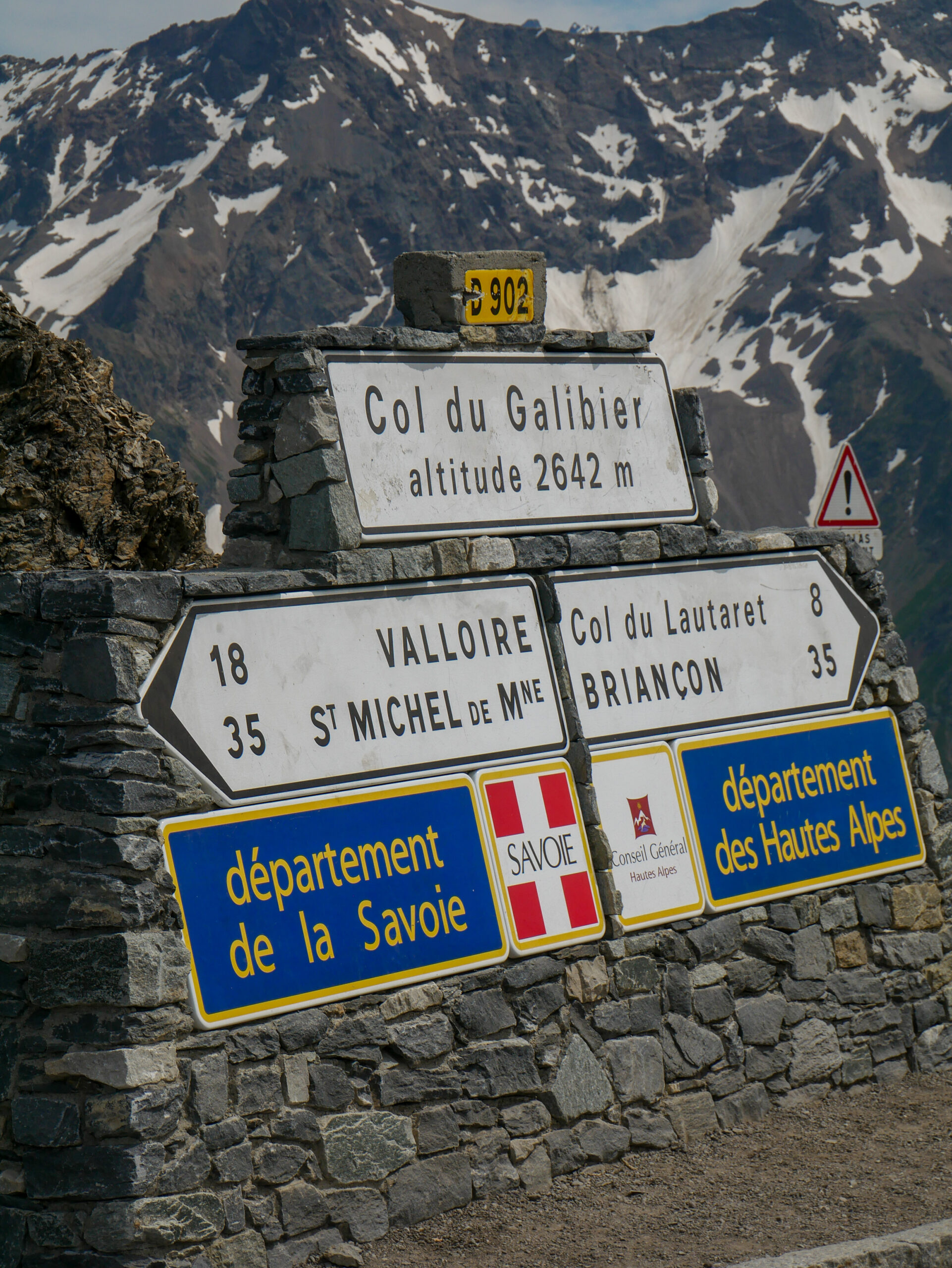
- Summit elevation: 2,642m
- From Col du Télégraphe/Valloire side: roughly 18km at an average of 6.9%, with the final few kilometres pushing past 10%
- Full combined climb (Télégraphe + Galibier from Saint-Michel-de-Maurienne): over 35km of near-continuous climbing, one of the longest sustained ascents in the Alps
- Tunnel option: a road tunnel near the summit allows you to bypass the very final, steepest ramps if needed, though most cyclists prefer to take the exposed road over the top for the views and the sense of completion
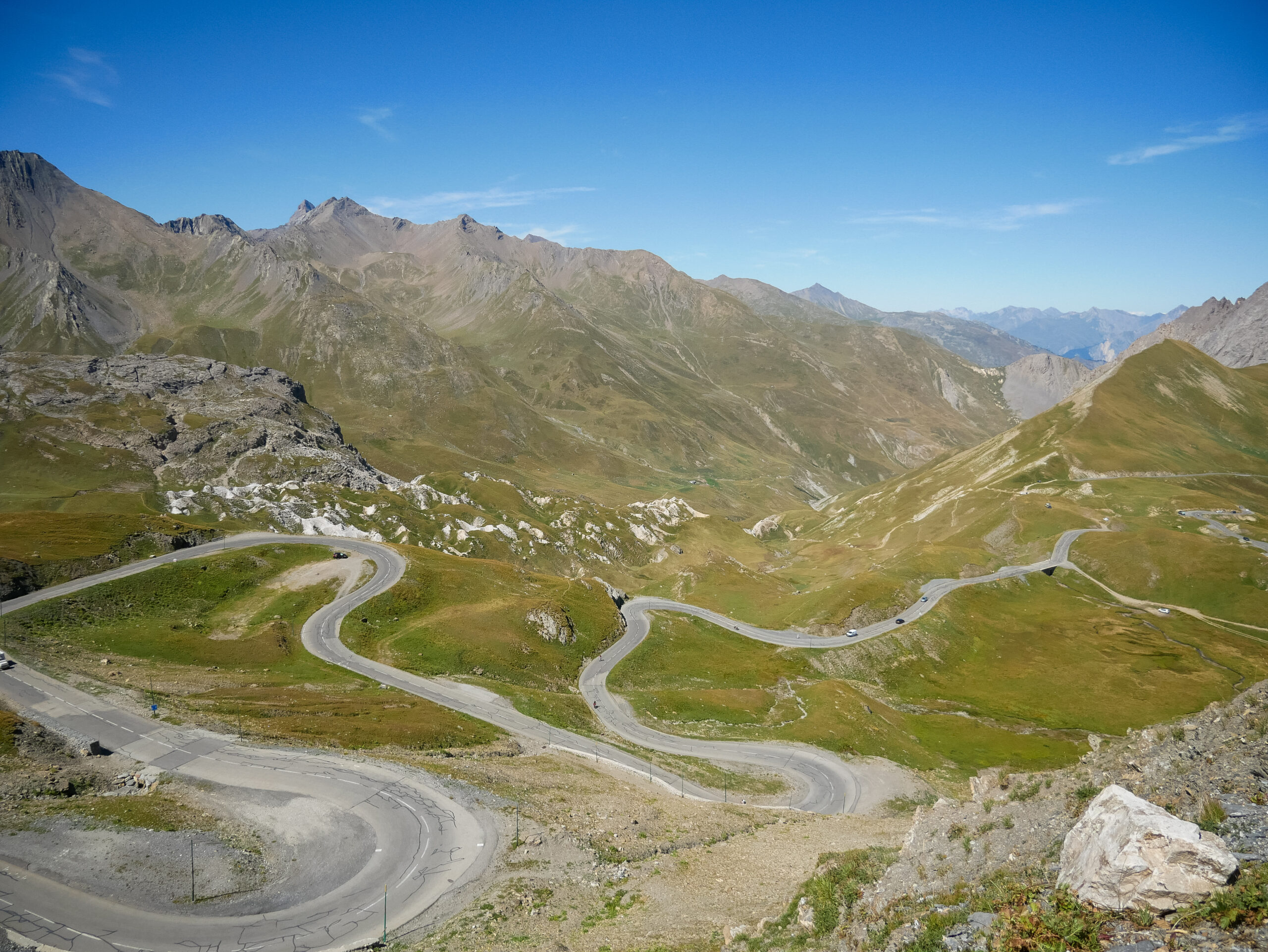
The final stretch above the treeline is where it gets serious — thinner air, exposed rock, and a gradient that steepens right when your legs least want it to, with switchbacks that expose you fully to whatever wind is coming off the surrounding peaks.
Which Direction to Climb
Most riders take it from Valloire, having already warmed up over the Col du Télégraphe on the way. This combination is the classic Tour de France approach and gives you a natural rhythm — a warm-up climb through forest, a short, fast descent into Valloire, then the main event starting fresh from the valley floor.
Climbing from the other direction, via the Col du Lautaret, is shorter but arrives at a steeper average gradient with less of a natural rhythm-building warm-up — a legitimate option if your itinerary approaches from that side, but generally considered the harder of the two main approaches for a first attempt.
Weather Warning
This is a genuinely high alpine pass, and conditions change fast, even by Alpine standards. Even in July, it’s common to find the summit 15–20°C colder than the valley, with wind that can be genuinely brutal and cut straight through a thin jersey. Snow is possible even in midsummer in a bad year — I’ve personally ridden through light snowfall at the summit in early July. Always carry a proper packable jacket, not just a gilet, for this climb specifically; it’s one of the few places in the Alps where I’d say a gilet alone genuinely isn’t enough.
Tips From the Road
Pace the lower slopes conservatively — riders who go hard through the forested lower section, where the gradient feels deceptively manageable, almost always pay for it above the treeline, where there’s no shade, no let-up, and the psychological weight of visible switchbacks stacking up ahead of you. Settle into a rhythm you could hold for two hours, not twenty minutes, and resist the temptation to chase other riders on the lower slopes.
Fuel properly before the final push — the last few kilometres above the treeline are where most riders’ pace drops off, and having enough in the tank for that section matters more than a fast start.
How This Fits Into a Cigala Cycling Tour
The Galibier is one of the centerpiece climbs on our French Alps cycling tour, ridden as part of a week built around the same roads the Tour de France uses almost every year. Full support vehicle backup means you can push yourself on the climb without worrying about the logistics of a mechanical issue or needing a lift on a tough day — the van is always within reach.
If you’d like to tackle the Galibier from a different base, combine it with other French Alps climbs, or build a longer trip around this region, we’re also happy to design a fully custom tour for your group.
Frequently Asked Questions
Is the Col du Galibier harder than the Col du Tourmalet?
They’re comparable in overall difficulty, though the Galibier’s exposed upper section and thinner air at higher elevation make the final kilometres feel notably harder than the Tourmalet’s steepest ramps.
Can I skip the very top section using the tunnel?
Yes, a road tunnel bypasses the final steep ramps near the true summit — some riders use this on a tough day, though most prefer completing the full climb for the views and sense of achievement.
What’s the best month to attempt the Galibier?
July and August offer the most reliable road conditions and weather, though the pass typically isn’t fully clear of snow debris until mid-to-late June, and afternoon storms are a real risk in high summer, so early starts are essential.
Do I need special gearing for this climb?
A compact chainset with an easy enough cassette to spin rather than grind the steeper upper sections is strongly recommended — this isn’t a climb to attempt on a straight 53/39 setup unless you’re an exceptionally strong climber.
— Matteo Cigala
Former European Gran Fondo Champion, Vice World Gran Fondo & Gravel Champion, Italian Gravel Champion, Coach & Tours Director of Cigala Cycling Tours