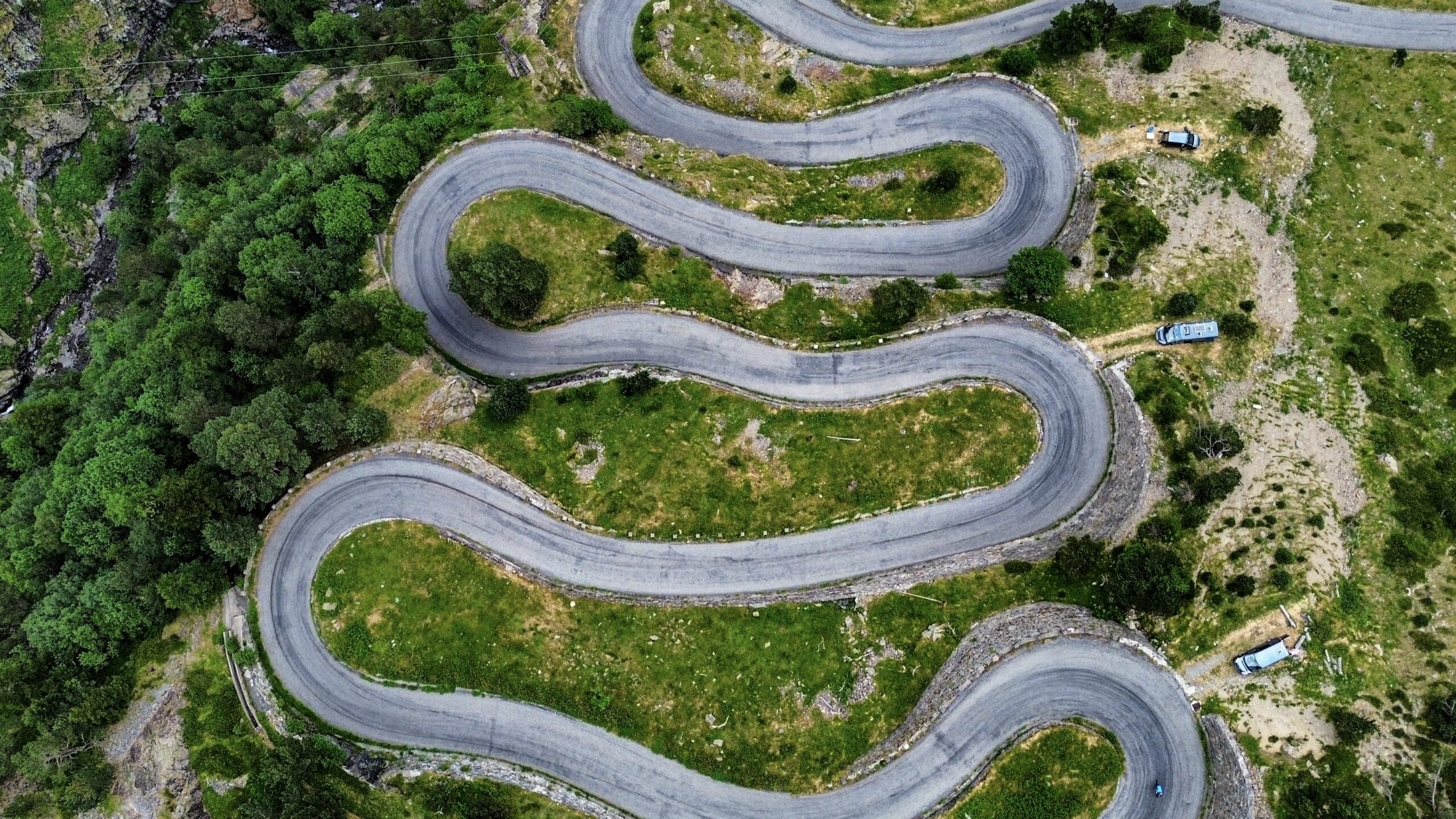
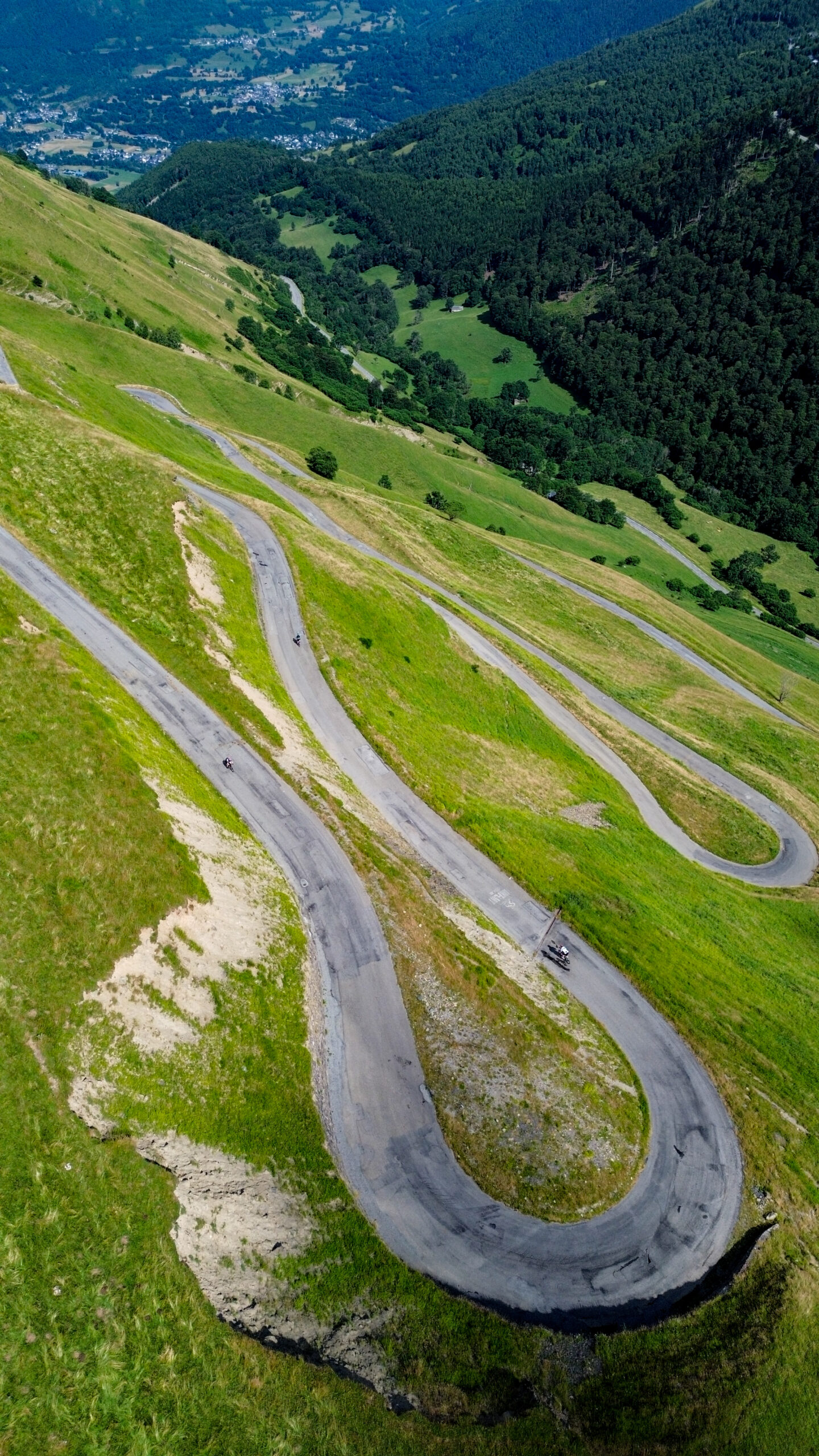
The Pyrenees don’t get quite the same spotlight as the Alps, and honestly, that works in your favor — quieter roads, fewer tour buses, and climbs that are every bit as demanding as their more famous Alpine cousins. Here’s how I’d match a route to your level, based on years of guiding riders across the full range of experience through this region.
Why the Pyrenees Feel Different From the Alps
The roads here tend to be narrower and quieter than their Alpine counterparts, with a wilder, more rural character — you’re as likely to be held up by a flock of grazing sheep crossing the road as by traffic. The mountains themselves are geologically older and, in places, feel more raw and less manicured for tourism, which a lot of experienced cyclists actually prefer. The weather is also more changeable, sitting closer to the Atlantic’s influence than the more continental climate of the Alps, so pack for both sun and sudden mountain showers regardless of season.us — thinner air, exposed rock, and a gradient that steepens right when your legs least want it to, with switchbacks that expose you fully to whatever wind is coming off the surrounding peaks.
For Newer Climbers
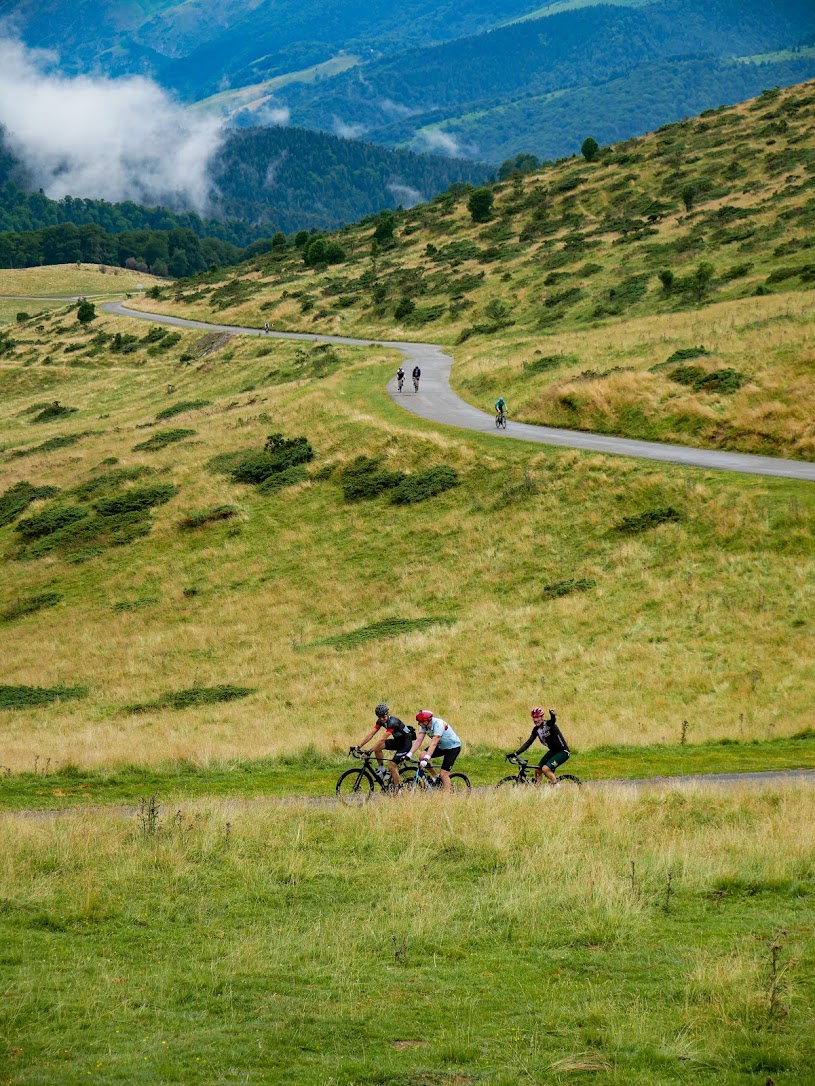
Col d’Aspin — a beautiful, forgiving climb with a fairly consistent gradient around 6-7%, forested lower slopes giving way to open pasture near the top, where cows and horses often graze freely alongside the road. At around 12km from the Arreau side, it’s long enough to feel like a genuine mountain achievement without the brutal ramps of the region’s hardest climbs, making it an ideal introduction to what real mountain climbing feels like.
Col de Marie-Blanque — shorter and steeper in sections than Aspin, but still approachable for a fit newer climber, with a distinctly different character on each side — gentle from the west, considerably steeper from the east.
For Intermediate Riders
Col du Peyresourde — steady, well-surfaced, and scenic, with enough elevation gain (around 1,000m over roughly 13-15km depending on starting point) to feel like a genuine achievement without the brutal ramps of the region’s hardest climbs. A regular Tour de France fixture and a good stepping stone toward the harder climbs later in a trip.
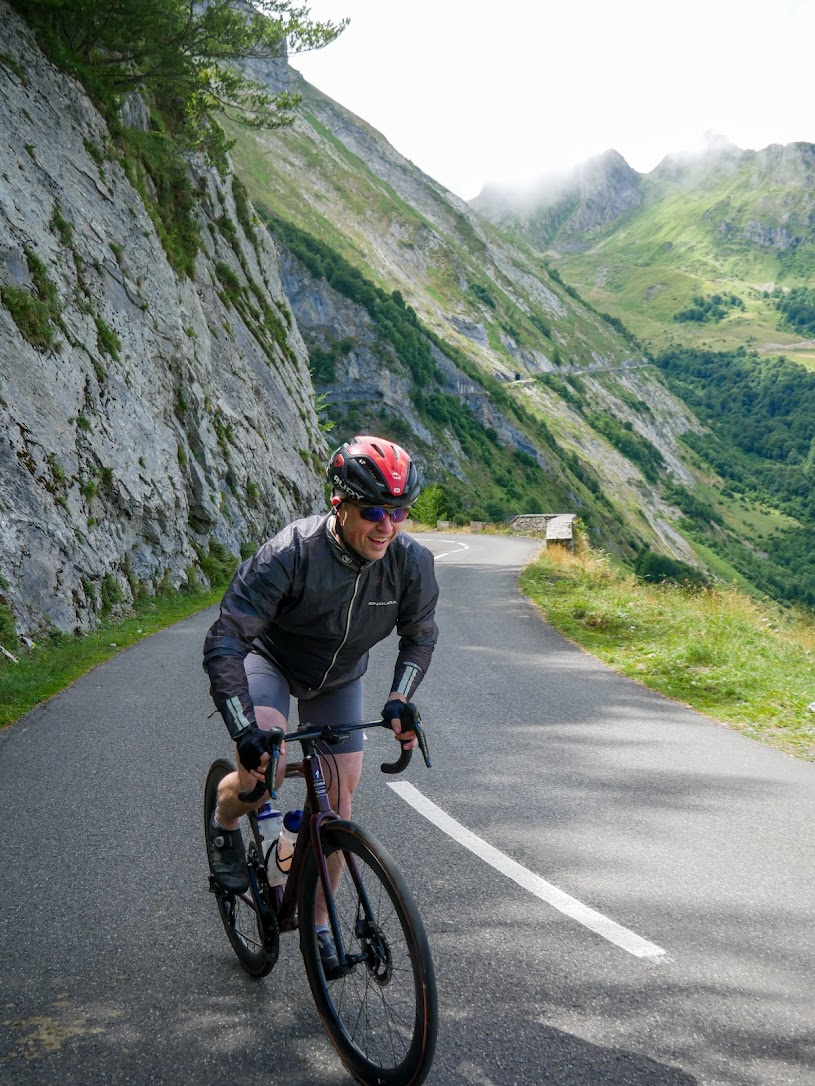
Col d’Aubisque — longer and more varied than Peyresourde, with a dramatic final few kilometres along a cliff-cut road with genuinely spectacular views, particularly on the approach from Argelès-Gazost.
For Experienced Climbers
Col du Tourmalet — the Pyrenees’ signature climb and one of the most-used Tour de France passes in history, first included in 1910 and a fixture of the race ever since. From Sainte-Marie-de-Campan, it’s around 17km at an average of 7.4%, with sections well into double digits near the summit, capped by a statue of the “Géant du Tourmalet” marking the pass. This is the one riders build a whole trip around, and rightly so.
Col du Portet / Pla d’Adet — steeper, more relentless, and popular with riders looking for something genuinely hard, with sustained double-digit gradient sections that offer no real recovery until the summit.
Hautacam — a more recent Tour de France addition but already legendary for its brutal, unrelenting steepness, particularly favored by strong climbers wanting a genuine test.
Building a Multi-Day Pyrenees Itinerary
A well-structured week doesn’t front-load the hardest climbs — start with Aspin or Marie-Blanque to build rhythm and confidence, move to Peyresourde or Aubisque mid-week, and save Tourmalet or Portet for when your legs (and your group’s morale) are at their strongest, typically toward the back half of the trip rather than the very last day, when accumulated fatigue can make even a moderate climb feel much harder than its numbers suggest.
Weather and Packing Notes
Because the Pyrenees sit closer to Atlantic weather systems than the Alps, rain and sudden temperature drops are genuinely more common here, even in midsummer. A packable rain jacket is non-negotiable in this region specifically — more so than in some drier Alpine destinations — and mornings can start noticeably cooler than the forecast high suggests.
How This Fits Into a Cigala Cycling Tour
Our Pyrenees cycling tour is designed to build through the week exactly as described above — starting with the more approachable climbs and working up to Tourmalet-level days — so riders across a range of fitness levels can genuinely enjoy the whole trip, not just survive it. Support vehicle backup means even on the hardest days, help is never far away if someone in the group needs it.
For riders wanting a genuinely bigger challenge, we also offer the Raid Pyrénées as a custom tour — the classic coast-to-coast traverse of the entire range, from the Atlantic at Hendaye to the Mediterranean at Cerbère, stringing together nearly every major pass mentioned above into one continuous, multi-day crossing. It’s a genuine badge-of-honour challenge in French cycling culture, traditionally completed within a set number of days to earn an official Raid Pyrénées certificate, and it’s one of the more demanding things we organize. If a single-region tour doesn’t feel ambitious enough, this is worth asking about.
If you’d like a different mix of climbs, a longer trip, or want to combine the Pyrenees with a neighboring region, we’re also happy to design a fully custom tour for your group.
— Matteo Cigala
Former European Gran Fondo Champion, Vice World Gran Fondo & Gravel Champion, Italian Gravel Champion, Coach & Tours Director of Cigala Cycling Tours