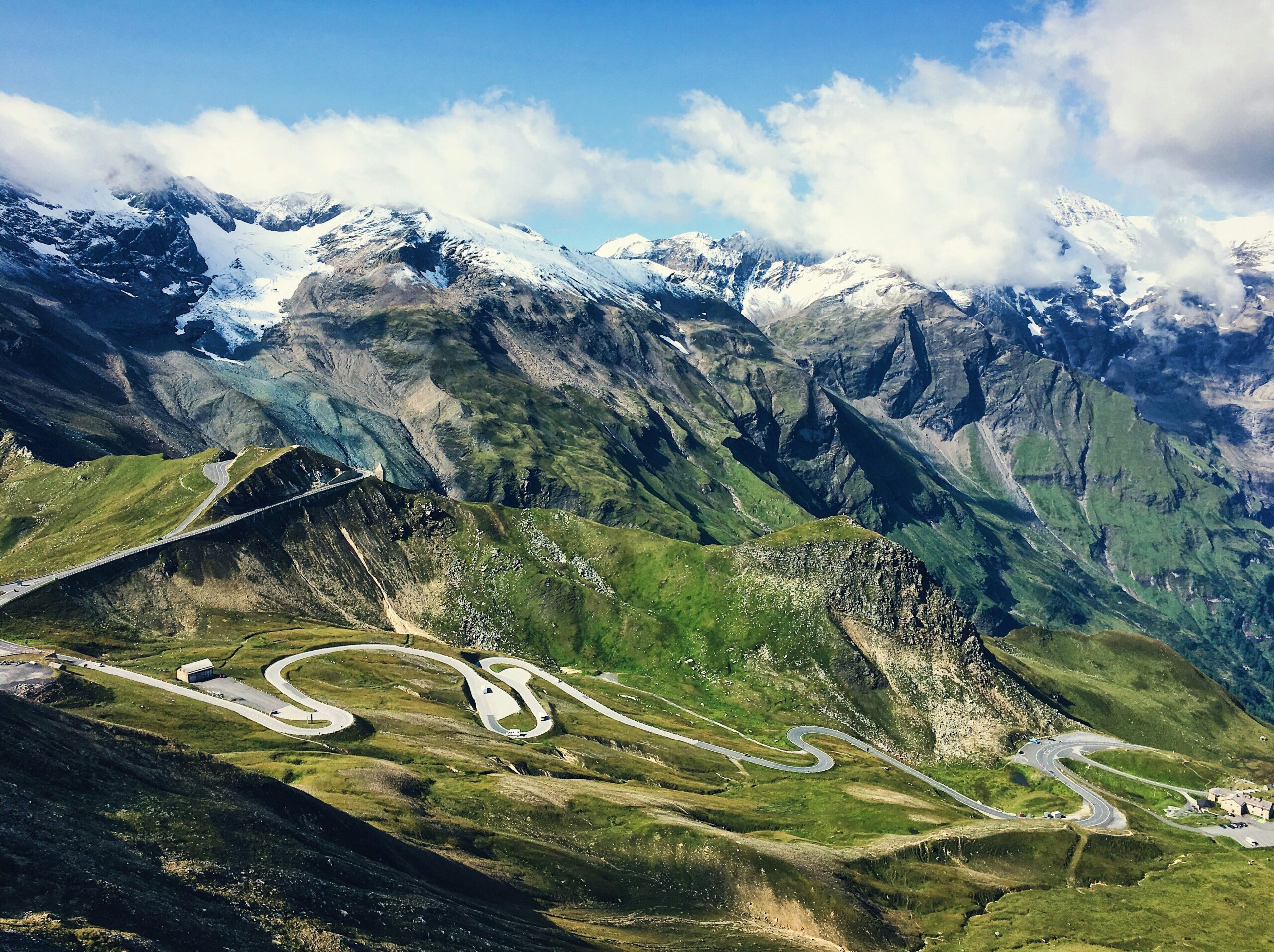
Austria doesn’t get quite the same attention as its Alpine neighbors France and Italy in cycling circles, but the Grossglockner High Alpine Road alone is reason enough to visit — one of the most spectacular high-mountain roads in Europe, built specifically as a scenic route rather than a simple point-to-point pass.
The Grossglockner High Alpine Road
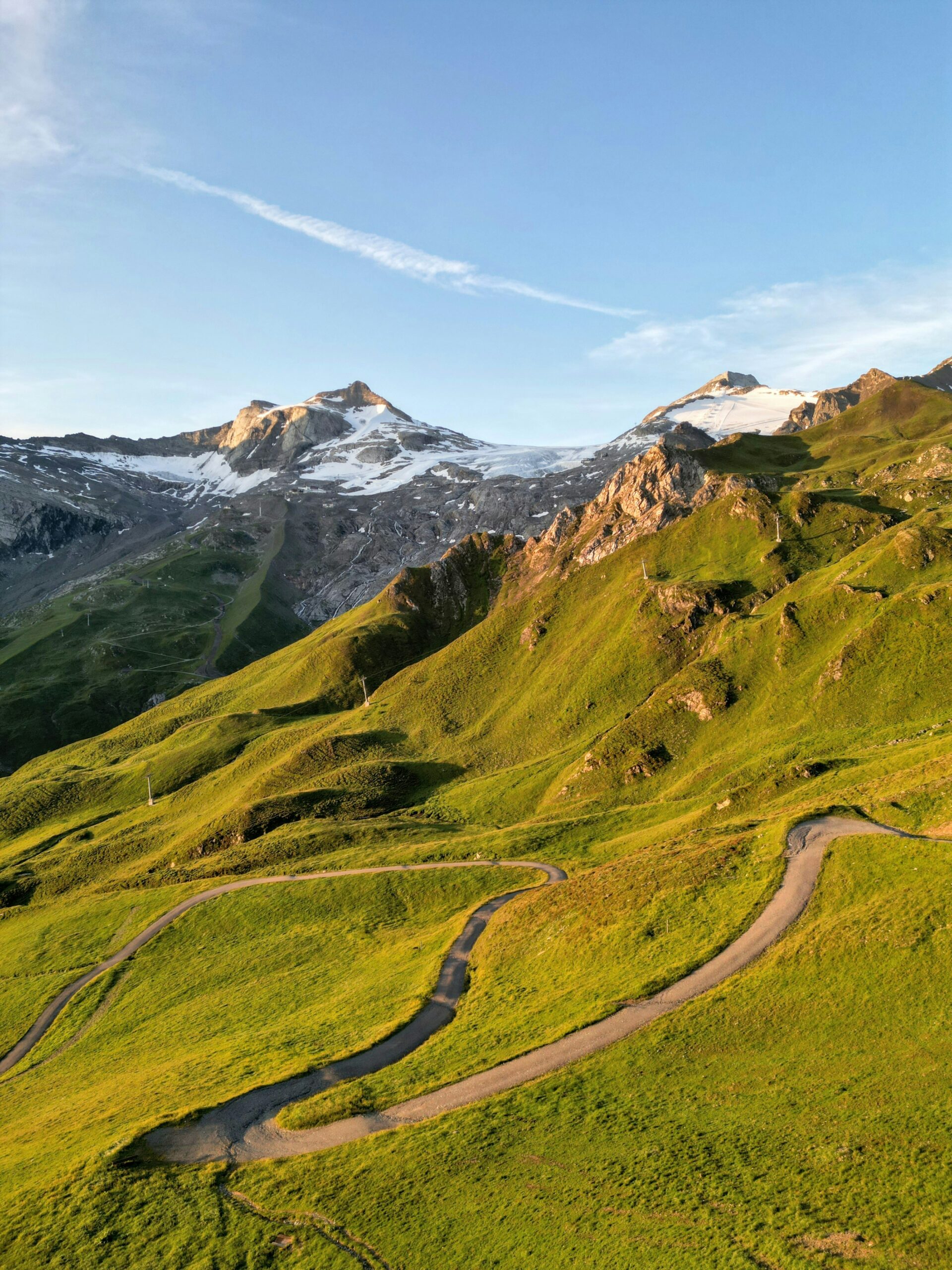
Unlike most Alpine passes, which developed as practical trade or military routes, the Grossglockner was purpose-built in the early 1930s specifically as a tourist road, and it shows — sweeping, beautifully engineered switchbacks climbing to over 2,500m at the Hochtor pass, with the Grossglockner itself, Austria’s highest mountain at 3,798m, dominating the view throughout. A toll road, it’s exceptionally well maintained, with multiple viewpoints and a dedicated glacier-viewing spur road (the Edelweissspitze detour) adding extra climbing for those wanting more.
Why This Climb Is Different
The purpose-built, tourism-focused history of the Grossglockner road means the gradient and engineering feel noticeably more considered than many older Alpine passes — consistently graded switchbacks rather than the occasionally brutal ramps found on some historic French or Italian climbs, making it a genuinely spectacular but slightly more approachable high-mountain experience.
Beyond the Grossglockner
Austria’s wider Alpine region offers considerably more than this single famous road — the Tyrol and Salzburg regions include numerous substantial passes and valley routes, generally quieter than equivalent terrain in France or Italy, with a distinctly Austrian character of well-kept mountain villages and excellent cycling infrastructure.
Weather and Season
As with any high Alpine pass, the Grossglockner is only open seasonally — generally May through October, with exact dates depending on snowfall — and conditions at the Hochtor summit can shift quickly regardless of valley weather, so the same packing advice as other high Alpine climbs applies here.
Austrian Mountain Culture
Austria’s Alpine villages have a well-established tourism infrastructure built initially around hiking and skiing, which translates well to cycling visitors — excellent accommodation, genuinely good food (expect hearty Alpine fare alongside more refined options), and a level of polish to the whole experience that some riders specifically seek out.
Best Time to Ride
June through September offers the most reliable conditions, with July and August seeing the most tourist traffic on the Grossglockner road specifically, given its dual status as both a cycling destination and a popular scenic drive for general tourists.
How This Fits Into a Cigala Cycling Tour
The Grossglockner and wider Austrian Alps work well as a distinctive addition to our Alpine offerings, or as one stage within a longer custom Raid Alps traverse linking Austria with neighboring Alpine regions.
If you’d like a dedicated trip focused on the Grossglockner and Tyrol region, we’re also happy to design a fully custom tour around Austria for your group.
Frequently Asked Questions
Is the Grossglockner road busy with car traffic?
Yes, particularly in July and August, given its popularity as a scenic drive beyond just cycling tourism — earlier starts help avoid the busiest midday traffic.
How does the Grossglockner compare to the Stelvio or Galibier in difficulty?
Broadly comparable in altitude and length, though the purpose-built, consistently engineered switchbacks generally make for a slightly less punishing gradient experience than some historic Alpine passes.
Is there a toll to ride the Grossglockner road?
Yes, it’s a toll road, though cyclists typically pay a reduced rate compared to vehicles — worth confirming current pricing when planning a visit.
Can the Austrian Alps be combined with neighboring regions like Slovenia or Switzerland?
Yes, this is a natural custom-tour combination given the geographic proximity, particularly appealing for a longer Raid Alps-style traverse.
— Matteo Cigala
Former European Gran Fondo Champion, Vice World Gran Fondo & Gravel Champion, Italian Gravel Champion, Coach & Tours Director of Cigala Cycling Tours