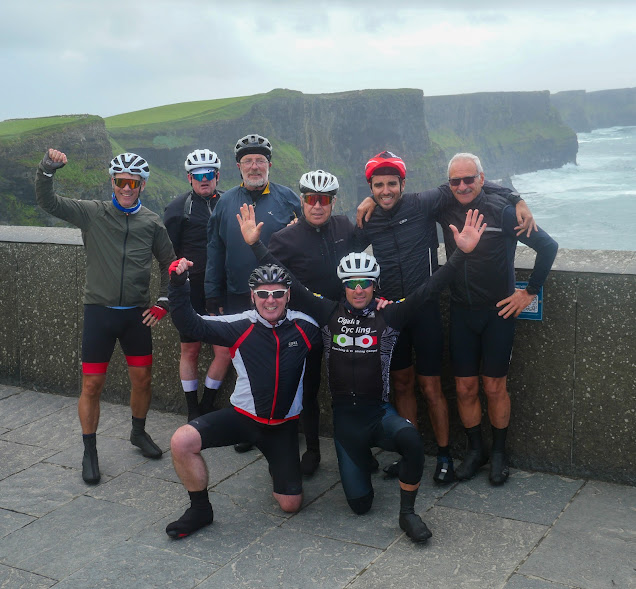
Ireland is the outlier in our destination list — no mountain passes chasing Giro or Tour de France history, no Mediterranean gravel. What it offers instead is something genuinely rare in European cycling: wild, dramatic coastal scenery with very little traffic, and a character of riding unlike anywhere else we operate.
The Wild Atlantic Way
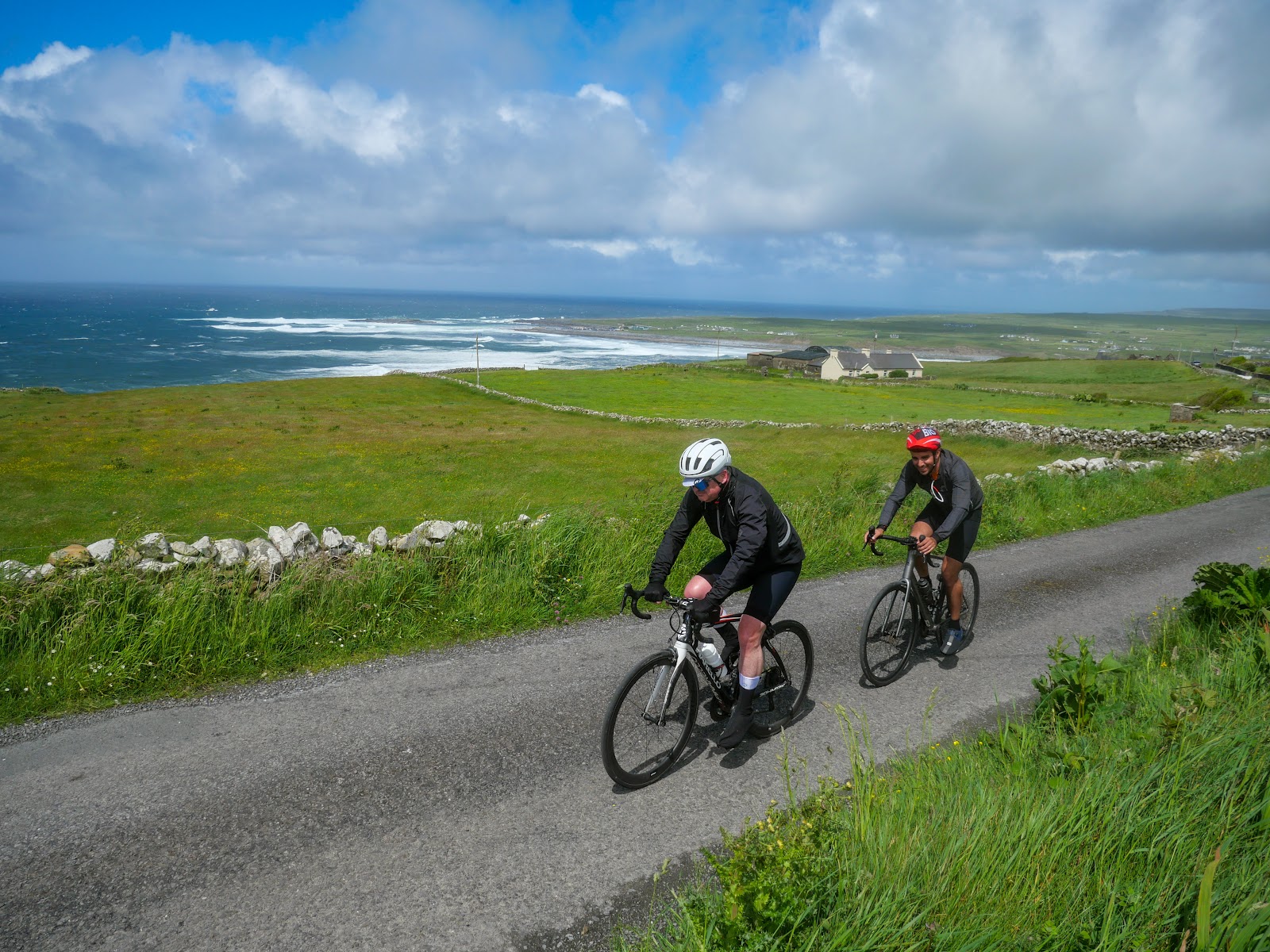
Our Ireland routes draw heavily on sections of the Wild Atlantic Way, the signposted touring route that traces almost the entire western Irish coastline from Donegal to Cork. It’s one of the longest defined coastal driving and cycling routes in the world, and riding sections of it puts you on genuinely quiet roads with the raw Atlantic on one side and green countryside on the other.
What the Terrain Is Actually Like
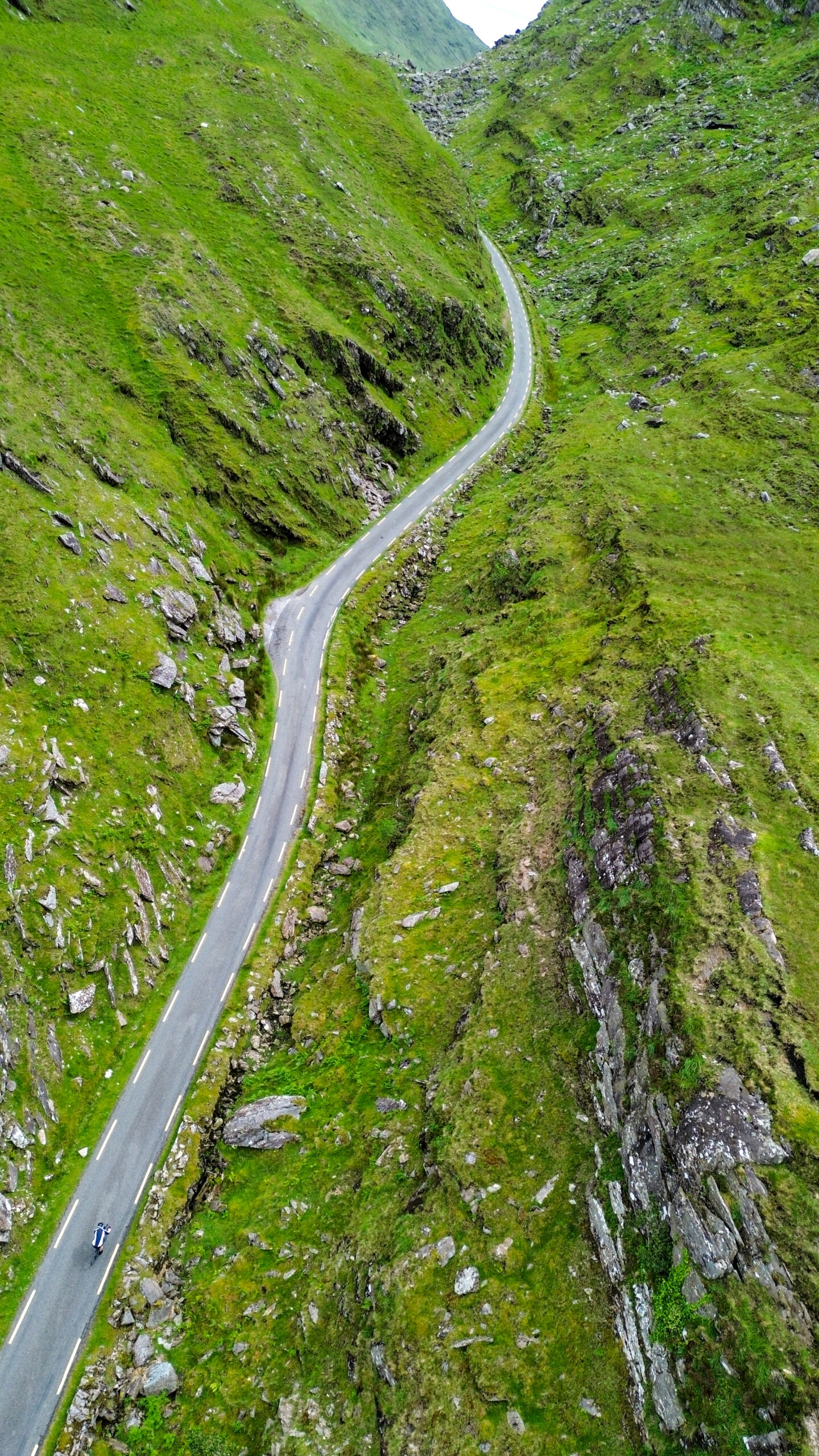
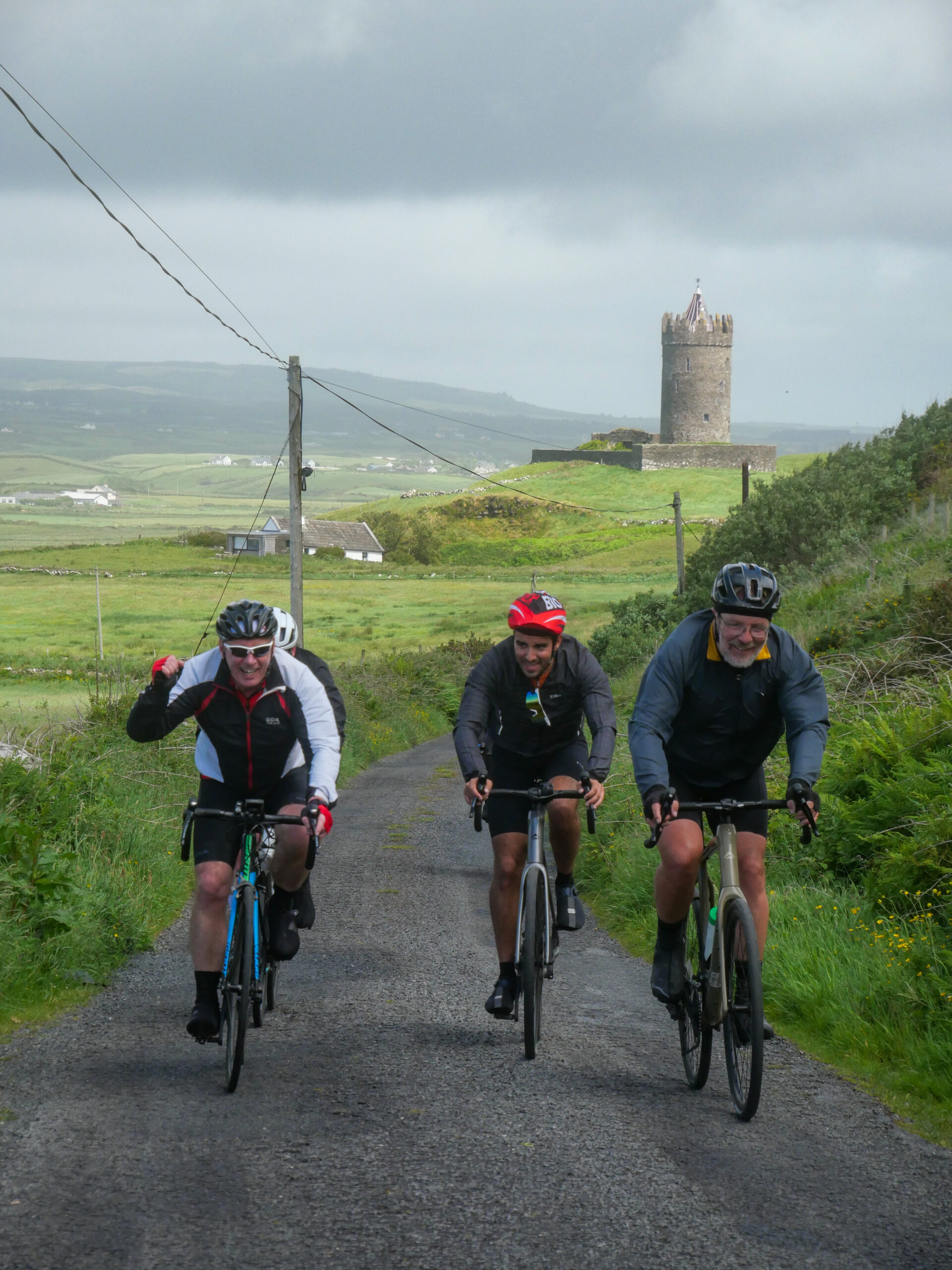
Expect rolling, occasionally punchy terrain rather than sustained climbing — short, sharp rises as roads cross headlands, interspersed with flatter coastal and valley stretches. Nothing here matches Alpine gradients, but the constant undulation and, more significantly, the wind, make for a more demanding ride than the elevation profile alone would suggest.
Weather and Wind
This is the single biggest factor to plan around in Ireland, more than in almost any other destination we operate. Atlantic weather systems bring genuine variability — sun, rain, and wind can all arrive within the same afternoon, and a strong headwind off the ocean can slow progress more than any hill. Packing for changeable conditions matters more here than for our Mediterranean destinations, regardless of season.
Best Time to Ride
May through September offers the most reliable weather, with June and July typically driest, though “reliable” in an Irish context still means packing for rain regardless of forecast. The extended daylight hours in early summer are a genuine bonus, with light lingering well into the evening.
What Makes Ireland Worth It
Beyond the riding itself, the culture along the way is a real draw — small coastal villages with genuinely warm hospitality, traditional music in local pubs after a day’s ride, and a slower pace than the more cycling-tourism-developed regions of continental Europe. Riders who come for the roads often say the evenings are just as memorable.
Common Mistakes First-Timers Make
Underestimating wind is the most common one — a forecast that looks entirely manageable on paper can produce a genuinely tough headwind section along an exposed headland. The second is under-packing for rain, assuming a sunny forecast will hold for the whole day; Irish weather changes faster than that.
How This Fits Into a Cigala Cycling Tour
Every one of our Ireland cycling tours is fully custom. Whether you’re looking for a relaxed coastal escape, an epic point-to-point adventure, or a route linking Ireland’s most iconic climbs and landscapes, we’ll design the itinerary around your group’s goals, fitness level, preferred daily distances, and travel dates. No two tours have to be the same. Get in touch with us to design a fully custom tour around Ireland for your group.
Frequently Asked Questions
Is Ireland a good destination for climbing-focused riders?
Not in the Alpine sense — there’s no sustained high-mountain climbing here. The challenge comes from wind, distance, and constantly undulating terrain rather than single big climbs.
What’s the best month to avoid rain?
No month guarantees dry weather in Ireland, but May and June tend to be the driest on average — pack for rain regardless of when you travel.
Is this a good trip for a mixed-ability group?
Yes — the terrain’s moderate, rolling character suits a broad range of fitness levels better than our high-mountain destinations do.
How does Ireland compare to Croatia’s coastal riding?
Croatia offers warmer, more reliably dry Mediterranean conditions with an island-hopping element; Ireland trades that for wilder, more dramatic Atlantic scenery and a distinctly different cultural experience along the way.
— Matteo Cigala
Former European Gran Fondo Champion, Vice World Gran Fondo & Gravel Champion, Italian Gravel Champion, Coach & Tours Director of Cigala Cycling Tours