Italy is where I learned to race, and it’s still the country I know better than any other on two wheels. The honest challenge isn’t finding good riding here — it’s narrowing down which region actually fits what you want from a trip, since “cycling in Italy” can mean anything from Giro d’Italia mountain passes to flat gravel through olive groves to an active volcano. Here’s how I’d break it down.
Why Italy Works So Well for Cycling
Few countries pack this much variety into one place — genuine high-mountain climbing in the north, gravel and hill-country riding through the center, and flat, sun-baked coastal terrain in the south, all connected by a cycling culture that runs deep. This is the birthplace of the Giro d’Italia, and in the mountain regions especially, you’re riding roads that carry real racing history, often with faded fan graffiti from the last time the Giro passed through.
Northern Italy: The Mountains
This is where Italy’s biggest climbing reputation comes from, and it’s split across a few distinct areas worth knowing apart.
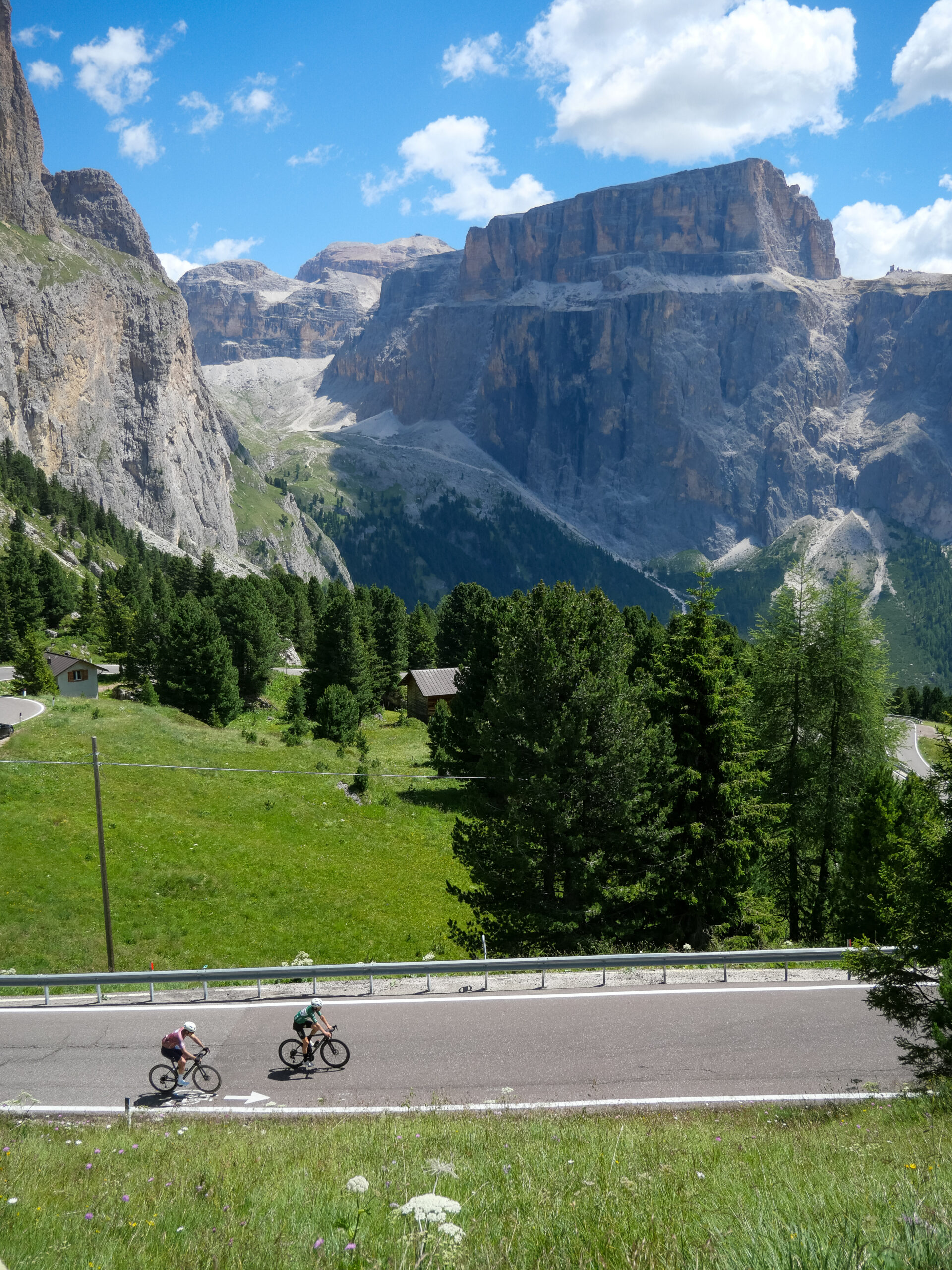
The Dolomites offer the country’s most photogenic high-mountain scenery — pale limestone peaks, Giro d’Italia climbs like Passo Giau and Passo Pordoi, and a season that runs roughly June through September. See our Dolomites timing guide for the details on when to go.
The Italian Alps, centered on the legendary Passo dello Stelvio, sit just west of the Dolomites and offer Italy‘s single most famous climb — full details in our Stelvio Pass guide.
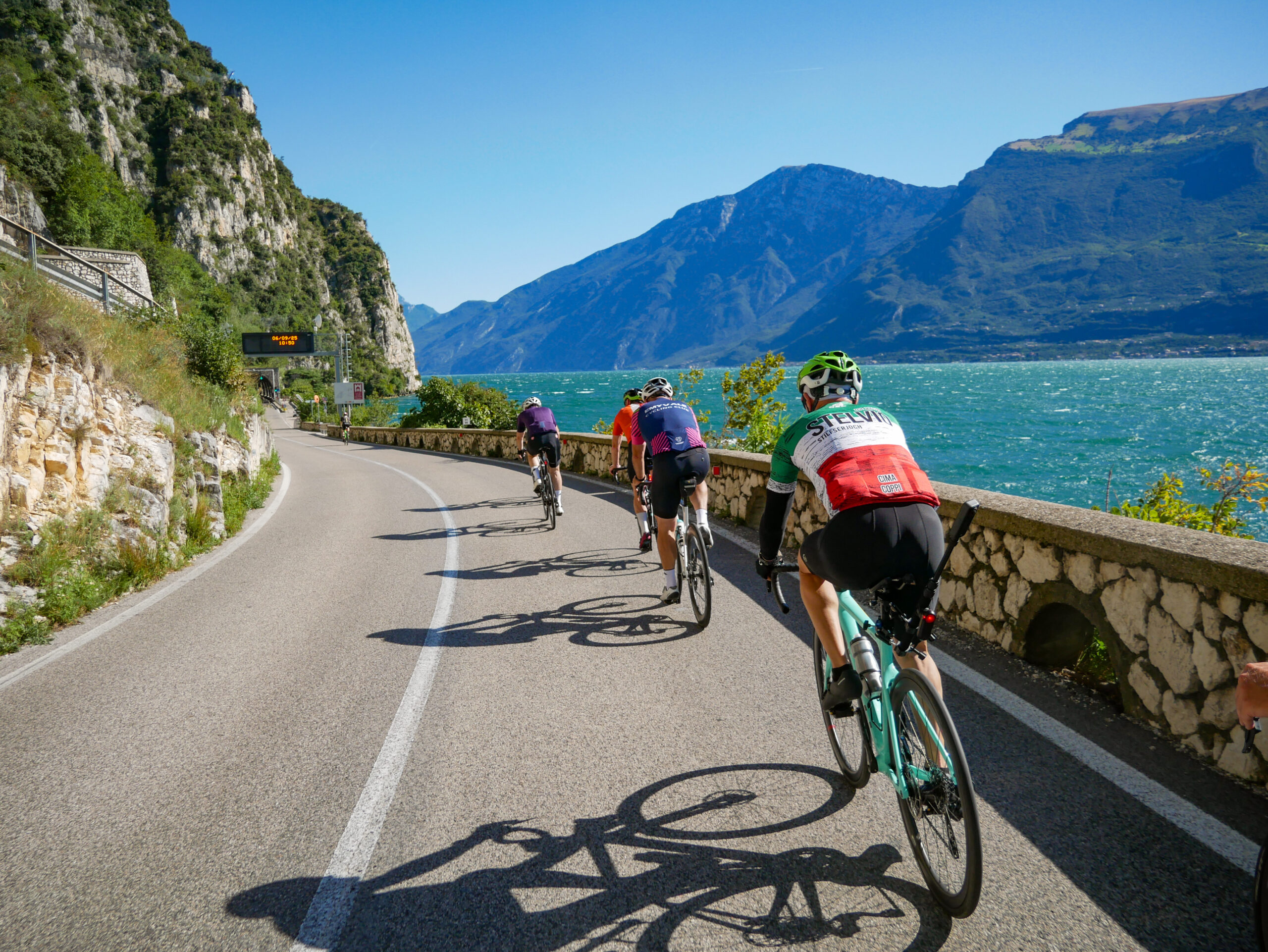
Lake Garda gives you a different kind of northern riding entirely — lakeside roads, Valpolicella wine country, and the option to add the Stelvio as a day trip on our September departure. Read more in our Lake Garda guide.
Lake Como, further west, offers its own dramatic alpine-lake scenery and access to climbs used in the professional Il Lombardia race each autumn.
Central Italy: Hills, Gravel, and History
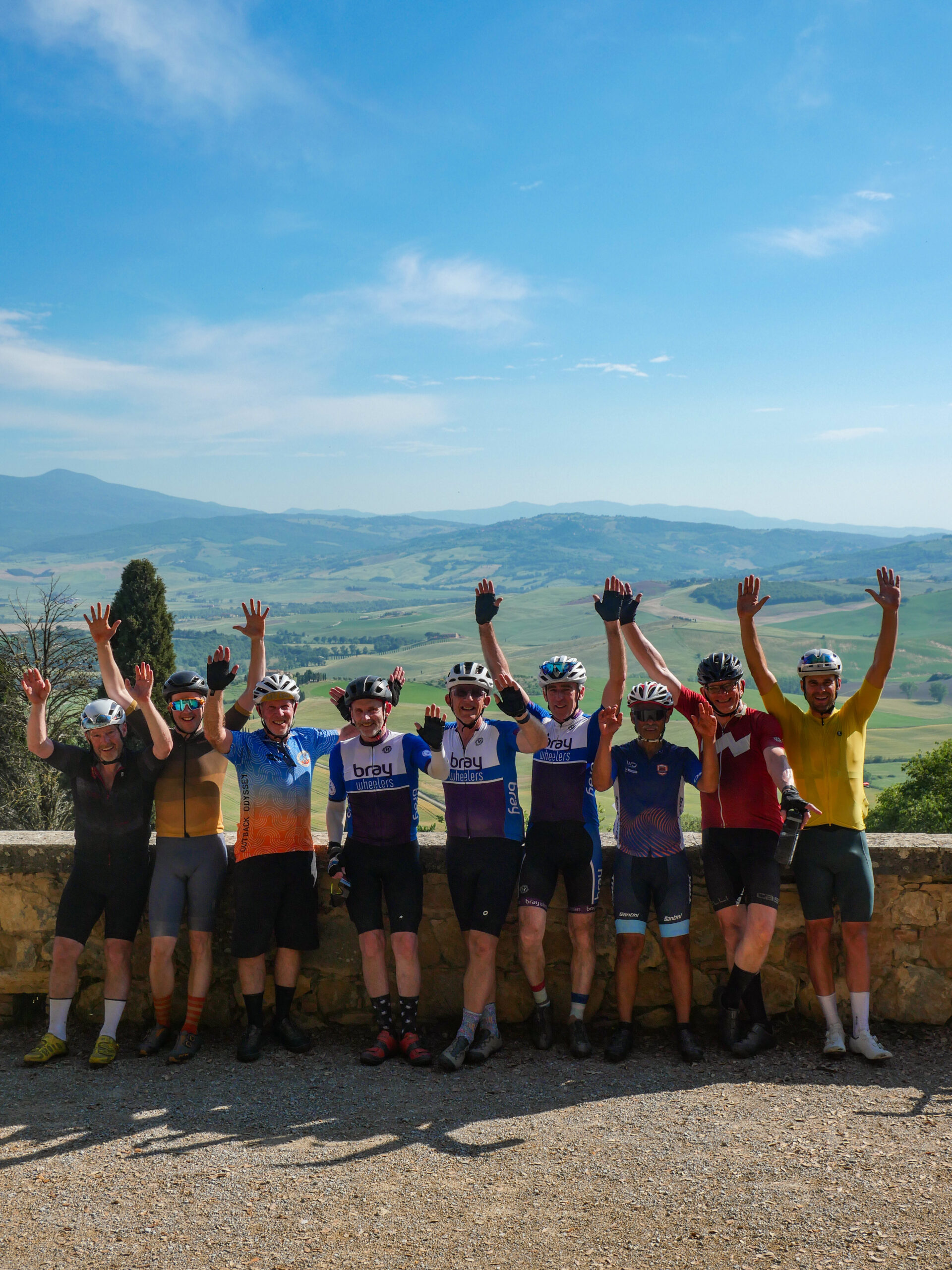
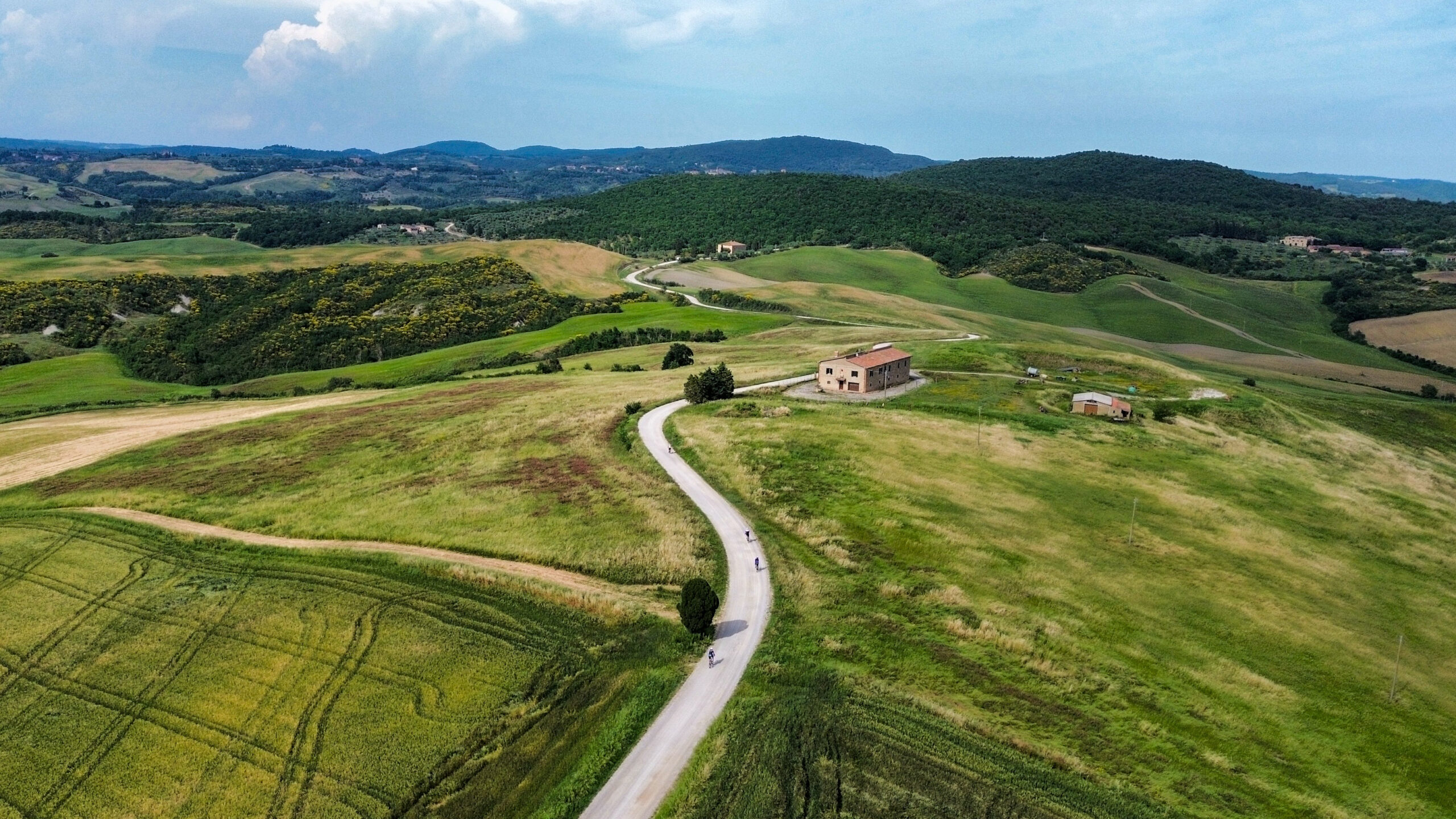
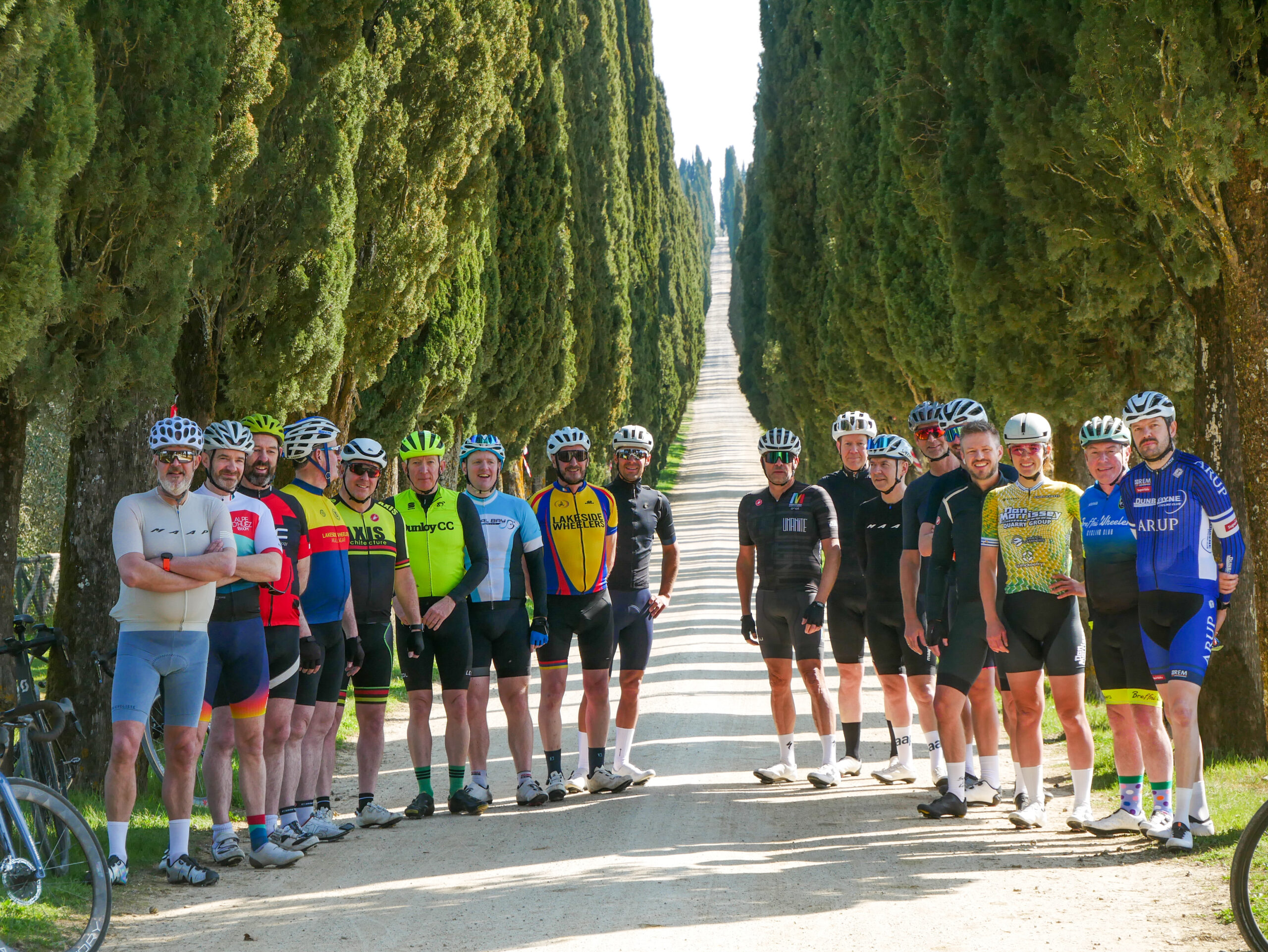
Tuscany is where central Italy’s cycling reputation is built, and it splits into two genuinely different experiences worth understanding separately. The famous Strade Bianche white roads near Siena are ridden on a road bike and are the site of the professional one-day race held every March — see our Strade Bianche guide. For a longer, more varied gravel experience covering considerably more of the region on a dedicated gravel bike, our Tuscany Gravel Tour, based on the Tuscany Trail, goes further afield into the Apuan Alps foothills and the wilder Maremma.
For riders wanting to link the north and center of the country into one continuous journey, our Italy coast-to-coast guide covers a Tyrrhenian-to-Adriatic crossing through the central Apennines.
Southern Italy and the Islands
The south offers a completely different character from the mountainous north — flatter terrain, more intense sun, and a slower, more agricultural pace of life.
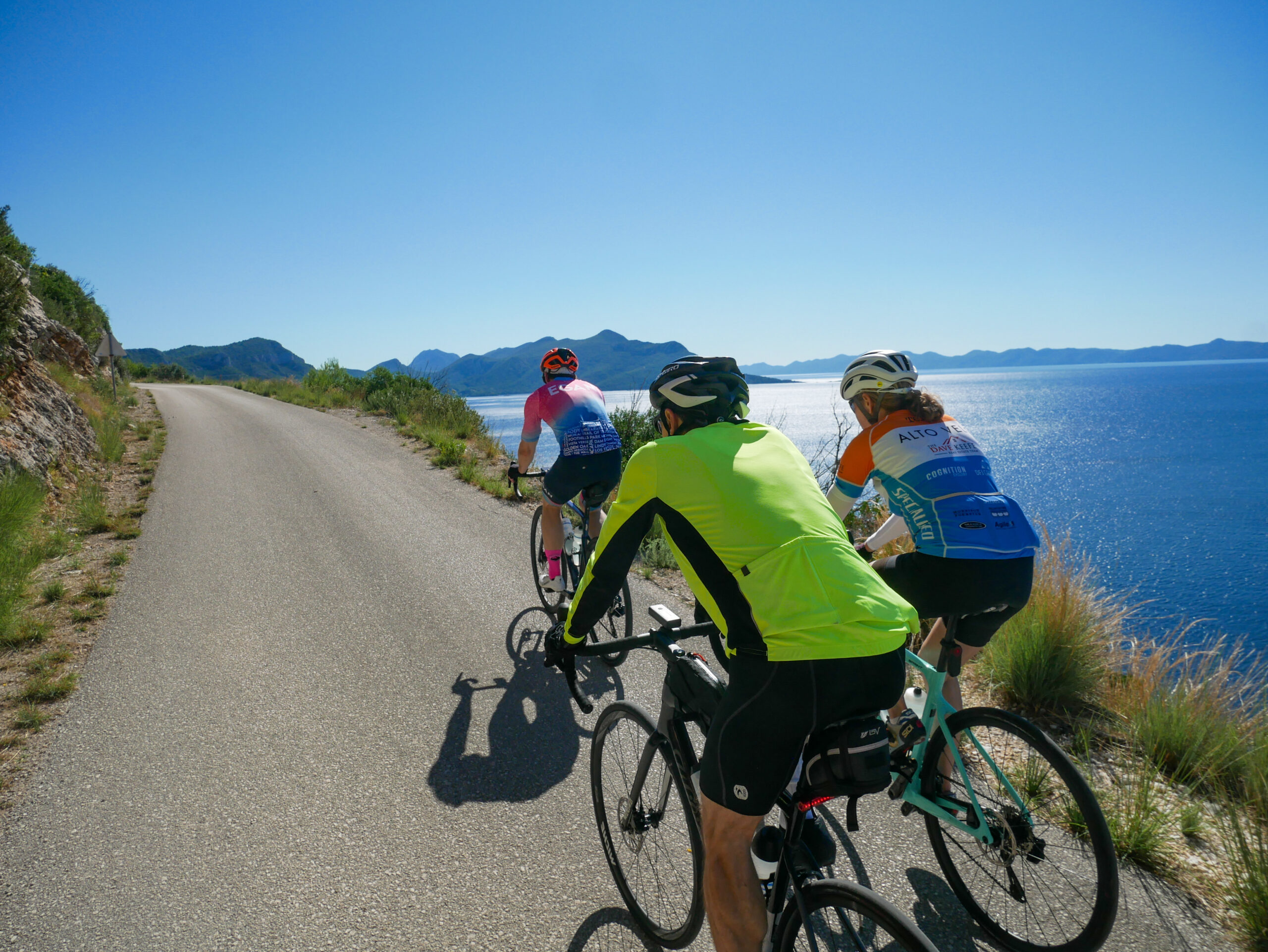
Puglia, Italy’s flat southern heel, is our most approachable Italian destination — olive groves, whitewashed trulli architecture, and long, easy-paced riding days. Details in our Puglia guide.
Sicily brings genuine mountain climbing back into the picture, via the singular experience of riding the lower slopes of Mount Etna, an active volcano — see our Sicily guide.
Sardinia offers a wilder, more sparsely populated alternative — granite mountains in the interior and dramatic, quiet coastal roads, covered in our Sardinia guide.Frequently Asked Questions
How to Choose a Region
If climbing legendary Giro d’Italia passes is the priority, go north — the Dolomites or Italian Alps. If you want gravel and wine country at a gentler pace, Tuscany. If you want an easy, food-focused trip with minimal climbing, Puglia. If you want something genuinely unusual, Sicily’s volcano or Sardinia’s quiet granite interior. And if you can’t choose just one, a coast-to-coast custom itinerary lets you experience more than one character of Italian riding in a single trip.
Best Time to Visit, By Region
Northern mountain regions need the June-to-September window when high passes are open. Tuscany and central Italy are best in spring (April-May) and autumn (September-October), avoiding summer heat. The south — Puglia, Sicily, Sardinia — follows the same spring/autumn logic, since summer heat here is often even more intense than further north.
How This Fits Into a Cigala Cycling Tour
Between our standard departures and custom itineraries, we cover the full range of Italian riding described above. If you’re not sure which region fits your group best, tell us what you’re after — serious climbing, gravel and wine country, or an easier coastal pace — and we’ll point you to the right fit, or design a fully custom tour that combines more than one region.
Frequently Asked Questions
Which Italian region is best for a first-time visitor?
This depends entirely on what you want — Tuscany offers the most balanced introduction to Italian cycling culture, scenery, and food for a first trip, while the Dolomites suit those specifically chasing serious mountain climbing.
Can I combine northern mountains with southern coastal riding in one trip?
Not easily in a single standard tour given the distances involved, but a custom itinerary can be built to visit more than one region if your timeframe allows.
Is Italy suitable for a mixed-ability group given the range of terrain?
Very much so — this is one of Italy’s real strengths as a cycling country, since the range from Puglia’s flat roads to Dolomites climbs means almost any fitness level has a well-suited regional match.
What’s the single most iconic Italian climb to put on a cycling bucket list?
The Passo dello Stelvio is the classic answer — Italy’s highest paved pass and one of the most famous climbs in the sport, detailed in our dedicated guide.
— Matteo Cigala
Former European Gran Fondo Champion, Vice World Gran Fondo & Gravel Champion, Italian Gravel Champion, Coach & Tours Director of Cigala Cycling Tours